Urban transport tires: wear in urban fleets
 Jean Zart 8 min read
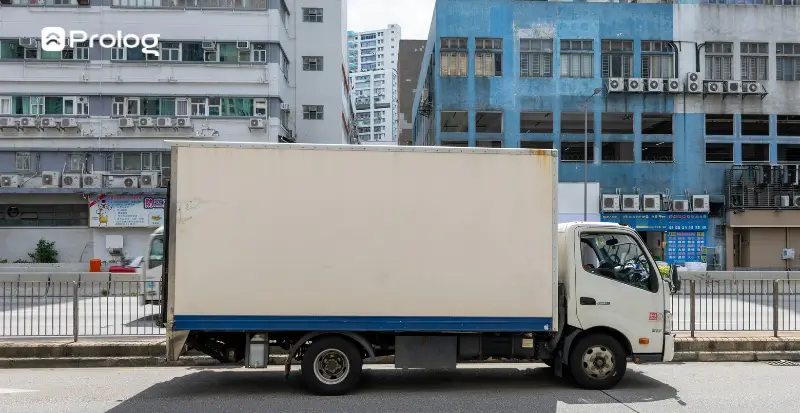
Those operating urban distribution fleets sometimes find tires lasting less than their expected useful life. Replacement seems to come prematurely, replacement inventory is never enough and tire spending feels disproportionately high for vehicles that do not travel such long distances.
Urban distribution is indeed one of the harshest environments for tires, more so than highways in many respects. But accelerated wear is not inevitable. It has specific causes, costs that go beyond the tire itself and practical actions that reduce the greater impact.
For anyone choosing tires for urban transport, the main point is to focus less on the individual purchase and more on the actual application: route, vehicle type, load variation, stop pattern and inspection frequency. A tire that looks suitable in the catalog can suffer much more when it spends the day braking, starting, maneuvering and crossing uneven pavement.
Read on:
- What makes urban distribution different and harsher on tires
- The causes of accelerated wear
- What this wear costs (beyond the tire itself)
- What to do: practical actions for urban distribution fleets
What makes urban distribution different and harsher on tires
Urban distribution operates under conditions tires were not designed to face so frequently. Unlike a highway vehicle traveling hundreds of kilometers at constant speed on even asphalt, an urban delivery vehicle faces a completely different scenario every day.
Constant stops are one factor, since a multi-stop operation can make 20, 30 or more deliveries a day. Every stop means braking, starting and, in many cases, maneuvering in a tight space. This continuous acceleration and braking cycle demands much more of a tire than steady driving. In stop-and-go urban traffic, frequent acceleration can also increase wear quickly.
Likewise, tires experience acceleration and braking due to traffic, especially at peak times or in large urban centers.
Urban streets also have more potholes, speed bumps, drainage dips, rails, cobblestones and roadworks. Tires absorb each of these impacts, which, when repeated, degrade the internal structure even when there is no visible surface damage. Cuts, punctures, impacts, cracks, bulges and uneven wear are among the most common damage associated with this kind of stress.
In addition, every low-speed maneuver with the steering at full lock generates intense lateral friction on the tire (a kind of stress that does not occur on highways) and accelerates wear at the sides of the tread.
A vehicle leaves the distribution center loaded and gets lighter with every delivery. The ideal tire pressure changes with the load, but calibration stays the same as at the start of the day. In practice, the tire spends much of the route at an inappropriate pressure for the weight it is supporting at that moment, so the manufacturer's recommended pressure for each operating condition needs to guide the calibration routine.
None of these conditions is new to distribution operators. What often goes unnoticed is the cumulative effect: each factor on its own seems minor, but their combination reduces tire useful life far more aggressively than any one would alone.
The causes of accelerated wear
Within this setting, the technical causes of premature wear can be identified and, in most cases, managed.
Calibration below the ideal pressure
In urban operations, calibration tends to be neglected more frequently.
A vehicle travels short distances, returns to base the same day and “seems fine.” But short distances do not mean low stress, and a tire running below the recommended pressure wears faster in any setting. Incorrect pressure can also reduce grip and increase braking distance, a sensitive issue on routes with many stops.
In urban distribution, with constant braking and variable loads, the impact is even greater. The best reference is always the pressure specified by the manufacturer for the vehicle and load condition, checked with cold tires and a reliable inflator.
Lack of rotation
Urban distribution vehicles naturally have uneven wear patterns: frequent turns, maneuvers and traction concentrate wear in specific positions. Without scheduled rotation, some tires need replacement long before others, and fleet cost per kilometer rises.
Rotation exists precisely to alternate positions and encourage a more uniform wear pattern. In urban operations, it works better when linked to mileage and visual wear inspection rather than just the calendar.
Undetected misalignment and suspension problems
Uneven urban pavement punishes the suspension and misaligns vehicles more frequently than highways. If operations lack a mechanical inspection routine linked to tire control, misalignment persists and appears as uneven wear that shortens tire life.
One-sided wear is often linked to axle geometry, and deviations can develop over time after impacts or harsh contact with curbs. When there is misalignment, correction needs to be carried out by a qualified specialist, because replacing a tire without addressing the cause simply restarts the same problem.
Tires unsuitable for the application
Not every truck, utility vehicle or light delivery vehicle tire suits urban distribution. Tires designed for highways (focused on low rolling resistance and durability at constant speed) do not perform well in urban conditions.
Choosing the right tire, with a compound and tread suited to frequent stops, maneuvers and uneven pavement, makes a direct difference to durability. In practice, choosing tires for urban transport requires considering application, load, route, tire position on the vehicle and wear history together before deciding on price alone.
Lack of periodic inspection
When vehicles travel short distances and return to base every day, there is a false sense that everything is under control. But precisely because vehicles are accessible every day, inspection should be routine — and in many distribution operations, it is not.
After impacts with obstacles such as potholes, speed bumps or curbs, inspection should look for external damage such as cuts, cracks and bulges. Ignoring this kind of damage increases the risk of future tire failure.
What this wear costs (beyond the tire itself)
The most obvious cost of accelerated wear is premature replacement: buying tires more frequently than planned. But the financial impact goes beyond the tire's price.
More unplanned downtime
A tire that wears quickly also fails more frequently, with problems such as punctures, bulges and blowouts. Every failure on the road means a stopped vehicle, a delayed delivery and, depending on the case, emergency service with the cost of mechanical assistance.
Punctures can result from sharp objects on the road, such as nails, screws or broken glass. Cuts can also come from poor road conditions, sharp objects or protruding parts. On urban routes, these risks occur alongside the pressure to meet delivery windows.
Increased fuel consumption
Incorrectly inflated tires or tires with uneven wear increase rolling resistance. The engine works harder to keep the vehicle moving.
In a distribution fleet with dozens of vehicles operating daily, increased diesel consumption accumulates, and cents per kilometer turn into thousands of Brazilian reais at the end of the month. When tire pressure is low, consumption per kilometer also tends to increase.
Lower retreading rate
Tires suffering uneven wear or structural damage from use in harsh conditions have casings with less potential for retreading. Rejection rates rise, tire life-cycle costs increase and the operation loses one of its main sources of savings.
What to do: practical actions for urban distribution fleets
Accelerated wear in urban distribution cannot be eliminated; after all, operating conditions are what they are. But it can be managed so tire useful life gets as close as possible to the maximum within this context:
Define a calibration frequency suited to the operation
For urban distribution, weekly calibration is the recommended minimum. If the fleet has vehicles with variable loads throughout the day, considering calibration at the start of each shift is ideal. Even if it seems excessive, the return in useful life compensates for the time invested.
The routine should use the manufacturer's recommended pressure for the vehicle and load, preferably with cold tires and an inflator with a pressure gauge in good condition. This avoids turning calibration into an improvised activity.
Establish scheduled rotation by mileage rather than time
Rotation at a fixed interval (every 60 days, for example) does not work well in urban distribution because mileage varies greatly between vehicles. The criterion should be kilometers traveled or the results of a wear inspection, whichever comes first.
Include tire inspection in the return-to-base routine
The vehicle returns every day. Using this moment for a quick visual inspection (pressure, visible damage, apparent wear) creates a layer of control that costs almost nothing and detects problems before they become failures on the road.
After crossing an obstacle, hitting a pothole or making hard contact with a curb, it is worth reinforcing the visual check. Approaching obstacles slowly and as perpendicularly as possible reduces stress on the tire, but inspection after the event remains important.
Choose tires suited to urban applications
Consult the manufacturer or supplier about lines specifically designed for urban distribution. The price difference between a highway tire and an urban tire can be small, but the durability difference in actual operating conditions can be 20% to 30%.
When choosing tires for urban transport, consider whether the fleet uses light utility vehicles, VUCs (Brazilian urban cargo vehicles), trucks or a combination. Each application changes the load, tire position, route type and exposure to stops and maneuvers. Purchasing should therefore start with actual operational use, rather than just the available size or lowest unit price.
Link tire inspection to mechanical inspection
Uneven wear is a symptom of a mechanical problem. If tire inspection and suspension and alignment inspection are separate processes, the cause of wear is never addressed, only the effect. Integrating the two processes prevents the same problem from recurring with every set of tires.
Record and measure
Without records of calibration, mileage per tire and the reason for disposal, any action is based on perception. Tire control in urban distribution requires data, and data requires a process.
To start organizing this control, download our free tire management spreadsheet (in Portuguese) and keep basic track of your operation's tires.
Frequently asked questions
My tires are not lasting as long as they should in urban operations. What should I investigate first?
How often should tires in an urban distribution fleet be inflated?
Should tire rotation be based on time or mileage?
Is it worth paying more for tires specifically designed for urban use?
Besides buying tires more often, what does accelerated wear cost?
What should be recorded to make it possible to address wear?
// newsletter
Fleet management content, straight to your inbox
Articles on tires, maintenance and fleet operations. No spam.