Premature tire wear: driving, calibration and road surface
 Luiz Felipe 4 min read
Premature tire wear is a common occurrence in fleets and has various causes.
One of the main causes is neglect of tire management in transport operations, generally overlooked because employees and managers do not realize how important it is.
Drivers often end up being responsible for the asset's shorter useful life.
This is because careless driving harms the tread rubber and internal structure, creating risks if the tire remains in use and preventing its reuse through retreading.
Tires, like other items, require attention to maintain fleet safety, productivity and savings.
What is premature tire wear?
Premature tire wear occurs when a tire loses the grip and resistance characteristics of its tread rubber very quickly, before it should.
In other words, when tire tread depth decreases in a short time, we can call the wear “premature” or “early”.
This occurrence is directly linked to lack of information and care on management's part. However, factors such as terrain conditions, driving style, the rainy season and alignment also affect tire durability.
What causes premature tire wear?
For tires installed on high-powered vehicles that reach high speeds, it is normal for wear to happen faster. After all, it is a natural physical consequence of a tire that offers greater grip.
But when wear is premature, the reasons include:
Aggressive driving
When performing high-speed maneuvers, for example, or when a driver wants maximum acceleration to overtake vehicles on highways, tires are affected because they transfer all the energy used to the ground and suffer from the excessive heat generated at that moment.
It is a fairly common practice among drivers that ends up damaging tires and creating other truck issues.
Vehicle geometry and preventive maintenance
Preventive maintenance inspects the vehicle and can identify factors that affect tire durability. Shock absorbers, springs, brakes and bearings, among others, are maintenance items that contribute to premature tire wear if they do not meet requirements.
Moreover, different wear on tires on the same axle can arise from a lack of vehicle geometry maintenance.
That is the part of preventive maintenance responsible for aligning the vehicle's suspension, which connects the four wheels in a rectangle, and balancing the wheels.
Lack of tire management
Irregular and excessive tire wear can become common without the necessary monitoring and maintenance. Over time, this leads to loss of performance, heavy steering and increased fuel use.
Keeping track of tire pressure and, especially, changes in tread depth should therefore be part of the fleet's routine.
Tires by road surface and severity
Each tire is developed for a specific type of terrain, such as those manufactured for performance on asphalt, those produced to balance performance on paved and unpaved roads, and those made for maximum performance on dirt, mud and rocks.
Identifying which tire to buy and install on fleet vehicles is easy. First, conventional tires (for light or freight vehicles) can be found by their severity classification:
- Low severity: tires with shallower grooves, good for highway routes.
- Medium severity: tires with medium-depth grooves, good for routes combining highways and urban roads.
- High severity: tires with deeper grooves, better for urban routes.
You can also find:
- Off-road tires: for dirt roads, mud and roads with lots of debris.
- Mixed-use tires: for routes that balance asphalt and dirt roads.
Grip level
Tire grip varies according to tire construction.
Low grip allows lighter rolling with less effort, but increases the risk of skidding on roads. Meanwhile, high grip gives the vehicle greater resistance to movement, but can increase fuel consumption.
What you should remember is:
There is no single ideal grip level you should choose when buying fleet tires. You actually need to manage tires, collecting and analyzing data to identify which tire types performed best in the operation — making your purchases smarter and more economical.
You may even notice that different routes and vehicles have different tire models that perform more efficiently.
Vehicle type
A tire's mileage characterizes its wear. When certain vehicles are equipped with high-torque engines and automatic transmissions, the chances of premature tire wear increase.
Each vehicle type also has different weights and characteristics that influence tire performance.
Calibration
Frequently checking and adjusting tire pressure helps improve not only performance but also fuel economy and transport safety.
The recommendation is for drivers to check and adjust pressure weekly, but this frequency can vary according to how consistently the vehicle is used and the ambient temperature — pressure loss is generally greater on hotter days.
Among other consequences, such as aquaplaning and tire blowout risks, premature wear results from incorrect calibration of these assets.
Tire inspection
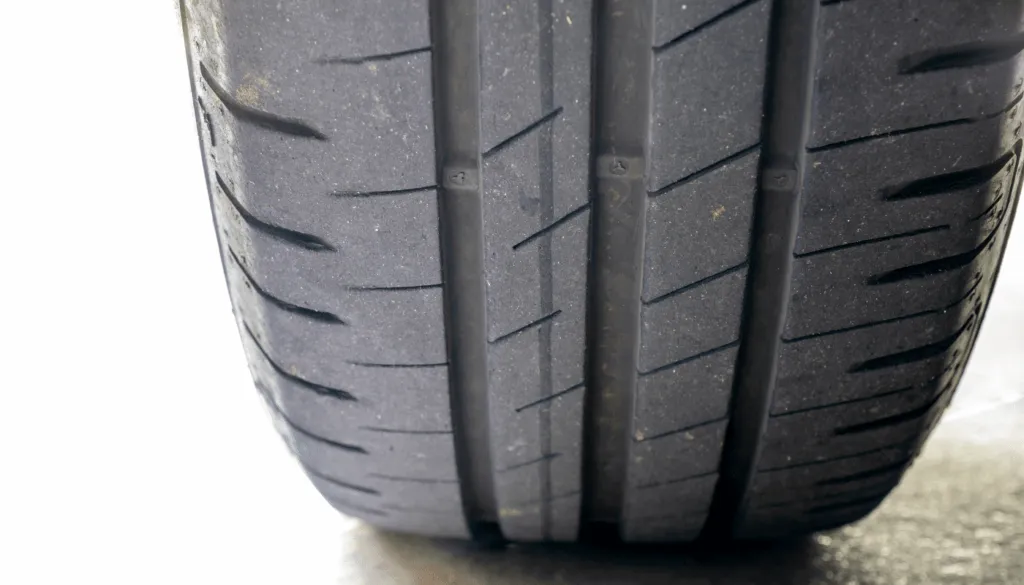
Inspection reveals whether tire wear has already reached the 1.6 mm indicator.
When the TWI marking is reached, it means it is time to replace, and perhaps even dispose of, this tire.
It is worth remembering that a vehicle's tires do not always wear at the same time, and you always need to measure tread depth to understand which actions are needed to prevent premature tire wear.
Now that you understand all the causes of accelerated tire wear, learn about the main solution for your fleet as well:
The 4 steps to simpler, more organized and efficient tire management.
Frequently asked questions
What is considered premature tire wear?
How often should drivers check and adjust tire pressure?
How do I choose the right tire for the route's road surface?
Is there an ideal grip level for fleet tires?
When does a tire need replacing?
Does vehicle preventive maintenance affect tire life?
// newsletter
Fleet management content, straight to your inbox
Articles on tires, maintenance and fleet operations. No spam.