Truck suspension: 4 warning signs and maintenance
 Luiz Felipe 5 min read
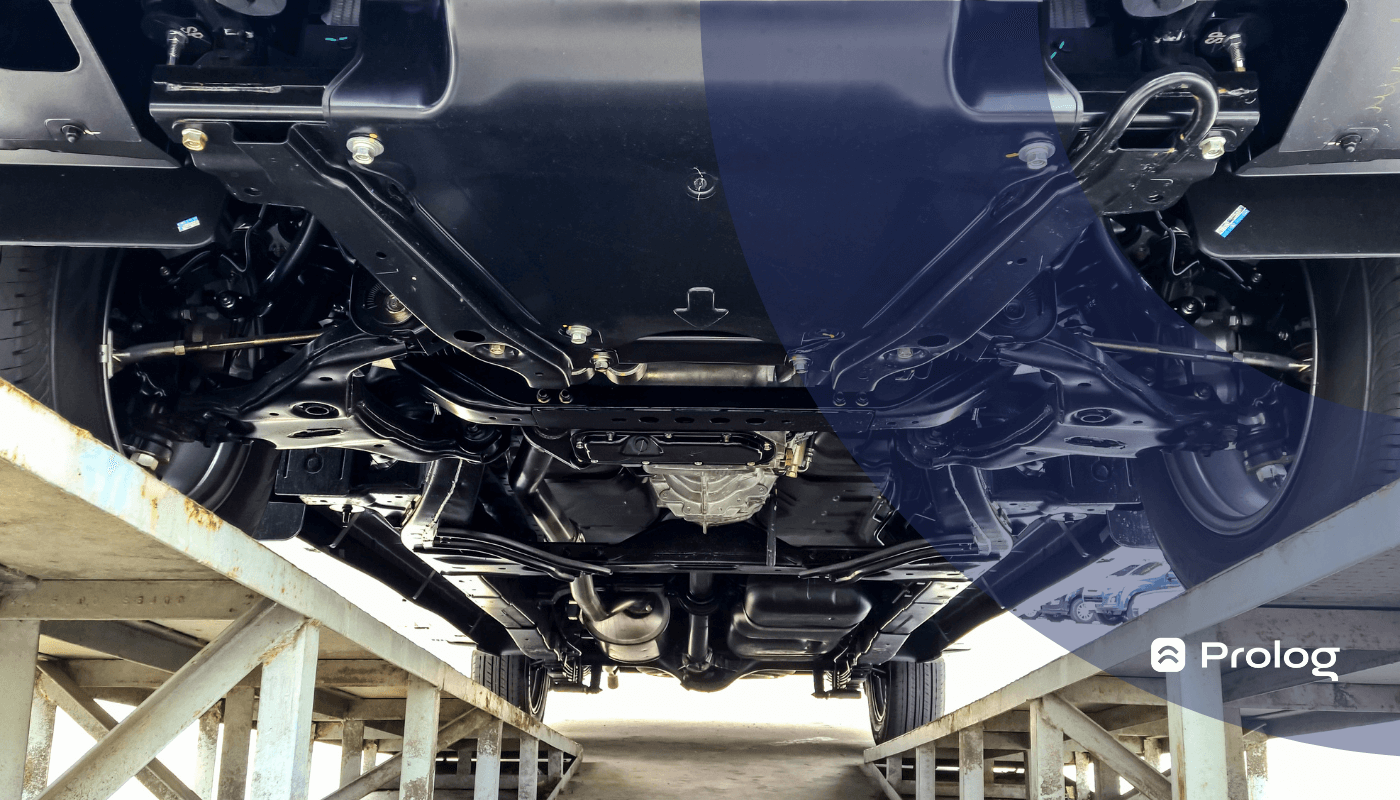
Absorbing ground impacts and providing vehicle stability are some of the functions of truck suspension.
From this overview alone, you can already see why it is important for it always to be in good working condition, right? If you had not noticed, let us confirm it here.
To add to that, it affects vehicle safety and comfort. After all, suspension consists of parts such as shock absorbers, springs, bushings and other components, and this combination also influences tire performance.
As such an important part, can it fail frequently? How can you ensure it works as expected without turning a general recommendation into a fixed rule for every truck?
Find these answers and more below.
What are the main truck suspension problems?
Loud noises
If there is a problem with the truck's suspension, you may hear very loud metallic noises while driving.
The problem may even be mistaken for malfunctioning shock absorbers. In fact, in these cases, the fault can also come from other suspension parts, such as worn rubber bushings or loose inner tie rod ends.
Unstable steering
Here, shock absorber problems may indeed be involved. It is usually wear that impairs the vehicle's damping, causing jolts and making the truck sway when accelerating or braking.
A reminder:
If the vehicle sways too much in corners, if the body skids when turning or if the steering pulls to one side, the suspension should be checked as soon as possible. Misalignment can also affect steering response and vehicle stability.
Excessive tire wear
You may have the best tires on the market, but none will survive if you do not look after the vehicle's suspension. Shock absorbers also feature here as something that can cause fleet losses through tire damage.
In other words, damaged shock absorbers increase tire wear, potentially leading to premature tire loss. Tires can also suffer from this problem through a slower braking response — a factor also linked to vehicle instability.
Another possibility is a bouncing wheel, with inadequate contact between the tire and the ground. In addition, unbalanced wheels usually cause vibration, and imbalance can accelerate wear on tires, suspension and steering components.
Spring damage
This problem is hard to identify because it produces no audible sign. However, damaged springs can be identified through wear or a loss of vehicle height.
Other “symptoms” that already indicate a more advanced problem with the truck's suspension springs include tire damage and damage to shock absorbers and bearings. As bushings, shock absorbers and other suspension components can deteriorate or sag with use, the vehicle's geometry can also gradually move out of adjustment.
How can you ensure truck suspension works properly?
Carry out preventive maintenance
All items in this system need to be inspected periodically. The schedule is harder to determine based on time alone, since it can vary with truck model, application, route type and each vehicle's trip frequency.
The 10 thousand km mark should therefore be read as a routine reference, not a single rule for every truck. The decision needs to consider operational reality and the signs found during checks, without ignoring noises, excessive swaying or abnormal wear.
Pay attention to this information:
If you notice noise or excessive vehicle swaying, especially during braking and acceleration, it is worth checking the suspension even before any planned interval is reached, since there is a high chance of a problem in this system.
And what should you inspect in truck suspension?
- Stabilizer links;
- Control arms;
- Springs and links;
- Bushings;
- Shock absorber mount;
- Ball joint;
- Boot condition;
- Bump stop.
Avoid overloading the vehicle
Weight above the recommended level impairs vehicle operation and can compromise suspension parts. This leads to a broken-down truck or the need for it to remain out of service for corrective maintenance.
Do you know what that means? Higher costs from both the maintenance type and idle time.
Take care of alignment and balancing
These factors are directly linked to the truck's suspension system and do not need to follow the same automatic rule for every fleet. Alignment is a mechanical adjustment of the suspension system, rather than the wheels themselves, and helps the vehicle maintain steering response, stability and more even tire wear.
Balancing, in turn, helps reduce vibration while driving. When wheels are unbalanced, vibration and premature wear can appear in tires, suspension and steering components. So instead of treating alignment and balancing as an automatic task every 10 thousand km for any truck, keep track of signs noticed in inspections and driving, such as steering pulling to one side, vibration and uneven wear.
Inflate the tires correctly
Tires contribute greatly to preserving suspension. They also work with it to ensure vehicle stability and increase trip safety.
In practice, the correct pressure should follow the vehicle manual's recommendations for front and rear tires. Properly inflated tires tend to be safer and last longer; incorrect pressure can affect stopping distance, braking grip and directional stability.
Lubricate the shock absorbers
Shock absorber lubrication should not be treated as a universal recipe for every truck. When this procedure is part of the fleet's routine, it needs to use products suited to the vehicle type and component being assessed.
If you remember, shock absorbers play an important role in the truck's braking time. To explain further:
Problems with them do not necessarily prevent the brakes from working, but can increase the time and distance needed for the truck to respond and stop.
For proper operation, therefore, do not apply products indiscriminately or treat lubrication as the only care measure. Combine a visual inspection of the assembly, attention to leaks, noises and wear, and procedures appropriate to the fleet's vehicle type.
Standardize the truck suspension inspection process
It is important for all parts to be checked, especially after a longer trip on poor roads. Some options include creating a fleet policy and using an electronic checklist for vehicle inspections.
A fleet policy establishes a common action for everyone in certain situations and can, of course, describe a vehicle check step by step, specifically including truck suspension.
However, that can mean more work. With the electronic checklist, you just register vehicles and license plates, create checklists and set the schedule for the responsible drivers.
Then, whenever an inspection is about to begin, simply open the checklist and select the relevant license plate. All items already have a ready-made answer standard and always follow the order created by the maintenance manager.
Even for a truck suspension checklist!
How about learning more about this digital platform? Click here to learn all about Prolog App's Electronic Checklist.
Frequently asked questions
What are the main truck suspension problems?
How often should suspension be inspected?
What should be inspected in truck suspension?
How do shock absorbers affect tires and braking?
What else helps preserve suspension?
// newsletter
Fleet management content, straight to your inbox
Articles on tires, maintenance and fleet operations. No spam.