Unstable car? 5 causes and signs to identify the problem
 Jonatan Fernandes 11 min read

The factors behind a vehicle's lack of stability are directly linked to the safety, efficiency and durability of the fleet. When stability is compromised, the chances of accidents, premature component wear and loss of performance increase, affecting not only the driver but the entire logistics operation.
Controlling this aspect requires attention to specific parts, proper maintenance and preventive driving. After all, instability can arise from different causes — from mechanical problems to inspection failures and insufficient care of the vehicle.
Want to see this in your fleet? Talk to a Prolog specialist
In this post, you will learn which elements determine stability, the parts involved in this process and how to identify signs that something is not working as it should.
See the topics:
- What determines vehicle stability?
- Which parts are responsible for vehicle stability?
- Why controlling vehicle stability matters
- Reasons that can lead to vehicle stability problems
- How to identify stability problems?
- How to control the stability of fleet vehicles?
- How to use the electronic checklist and maintenance management to improve fleet stability?
Keep reading and see how to keep your fleet stable, safe and at maximum performance.
What determines vehicle stability?
A vehicle's stability is the result of several systems working, such as suspension, brakes, tires and alignment. Each of these systems plays an important role in maintaining control and drivability of the vehicle, especially on long trips and in different road conditions.
For example, the suspension absorbs impacts and keeps the tires in contact with the ground, ensuring the vehicle does not lose its balance. The brakes, in turn, need to act precisely to prevent skidding and allow safe stops. In addition, tires with correct calibration and wear at normal levels are responsible for ensuring grip and preventing the vehicle from sliding.
When one of these systems fails or is out of adjustment, the vehicle becomes harder to control, increasing the risk of accidents and compromising the safety of the driver and the cargo.
That is why understanding how these systems work together is essential to ensure fleet stability and operate more safely.
Which parts are responsible for vehicle stability?
Stability depends on the proper functioning of several parts that work together to keep the vehicle firm and safe, even in sudden maneuvers or on uneven roads.
Among the main ones are:
- Shock absorbers: control suspension movement and reduce oscillations after impacts.
- Springs: support the vehicle's weight and absorb part of the road shocks.
- Stabilizer bars: minimize body roll in curves.
- Bushings: ensure the suspension parts are secured and correctly aligned.
- Ball joints: connect the suspension to the wheel, allowing controlled movements.
- Bearings: allow the wheels to turn smoothly and prevent excessive vibrations.
- Control arms: connect the wheels to the vehicle's structure, maintaining stability.
Keeping each part in good condition is important so that the assembly works as a whole in a regular way, ensuring safety and comfort while driving.
Want to see this in your fleet? Talk to a Prolog specialist
Why controlling vehicle stability matters
Imagine having to drive a truck for hours, feeling that it is unstable. It is not just uncomfortable — it is also dangerous. The driver feels insecure, afraid of having an accident, but at the same time needs to make sure the delivery is not late.
That is why the fleet manager plays a key role: keeping vehicle stability under control to reduce the risk of accidents, prevent premature component wear, cut losses from emergency repairs and, above all, prevent vehicles from sitting idle.
When stability is kept in check, operations planning becomes much more accurate. In addition, the company strengthens its reputation by ensuring a safe and efficient operation, conveying confidence to customers, employees and business partners.
Controlling vehicle stability is a strategy that protects assets, improves results and contributes to the sustainable growth of the fleet.
In short, the importance of controlling vehicle stability is:
- Lower risk of accidents
- Less spending on worn parts
- Fewer urgent repairs
- More safety and comfort for the driver
- Higher productivity
- Solid reputation and reinforced confidence
But, above all, safety must be the number one priority.
Reasons that can lead to vehicle stability problems
As you have seen, vehicle stability depends on the good condition of several systems and components that need to work in harmony. When any of them fails or is worn, drivability is compromised, increasing the risk of accidents.
In addition, external factors, such as the type of road and the way the vehicle is driven, also influence this stability. That is why quickly identifying what causes these problems is essential to ensure the safety and efficiency of the operation.
Below, you will see the main reasons that can lead to a lack of vehicle stability:
1. Lack of balancing and alignment
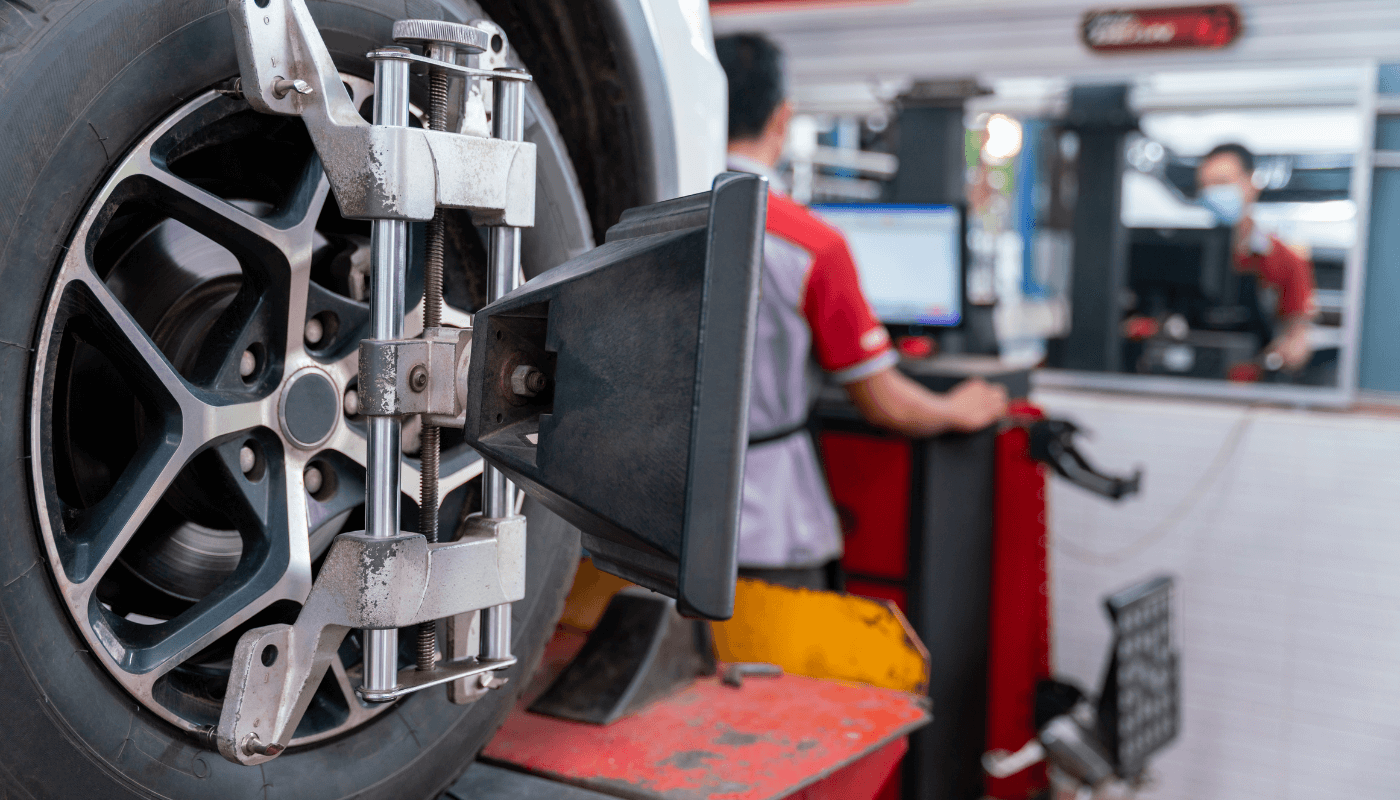
Wheel balancing distributes the weight of the tires evenly, reducing vibrations and uneven wear. Meanwhile, alignment adjusts the angles of the wheels so that they are aligned with the vehicle's axle, which helps maintain stability and makes the vehicle easier to control in curves and on straights.
When balancing or alignment is out of spec, the vehicle may vibrate or “pull” to one side, increasing the risk of accidents and accelerating tire wear. That is why you should make these adjustments every 10,000 km or according to the manufacturer's guidance, always with a specialist.
2. Suspension failures
The suspension's job is to absorb road impacts, keeping the vehicle stable and the driver comfortable while driving.
If the suspension does not receive proper maintenance, parts such as shock absorbers, springs and suspension arms wear out, causing shaking in the steering wheel and loss of control. Shock absorbers in particular bear constant loads, and excessive wear can cause critical failures, especially on uneven terrain.
That is why you should carry out periodic inspections to ensure the proper functioning of the suspension, extend the useful life of the vehicle and prevent accidents.
3. Irregular tire pressure
Maintaining the correct tire pressure is essential to ensure stability.
When the pressure is below the recommended level, tires lose grip, especially in curves and sudden braking. Excessive pressure, on the other hand, leaves tires more vulnerable to cuts and deformation.
In addition, inadequate pressure increases friction with the asphalt, accelerates wear and generates vibrations that hurt stability. Check the pressure regularly to avoid these problems and also improve fuel consumption.
4. Lack of care for brake discs and pads
The brake system is vital for the vehicle's safety and stability.
Worn discs and pads increase braking time and cause vibrations, especially in sudden stops. This uneven wear compromises brake effectiveness and can lead to loss of control in emergency situations.
That is why you should carry out periodic servicing and replace discs and pads whenever necessary to keep safety up to standard.
5. Transmission problems
The transmission, especially the CV joints, transmits power from the engine to the wheels, ensuring they turn smoothly and in sync.
If the joints are loose or worn, the vehicle jerks and vibrates, which makes it harder to drive and compromises stability.
In addition, the drying out of the rubber boots that protect these joints makes it easier for dirt to build up and accelerates wear. That is why you should inspect and lubricate these components regularly to avoid serious problems and ensure safe driving.
Other common problems to avoid
Watch out for oil leaks. When a shock absorber leaks, it loses efficiency, directly hurting the vehicle's stability.
To identify this problem, check whether oil has built up on the body of the shock absorber. If there is a leak or any sign of damage, send the vehicle to a specialist for evaluation.
If all components are in good condition and the instability continues, the problem may be in the engine, which involves more complex causes.
That is why when you resolve small failures day to day, you keep them from becoming big problems capable of compromising the fleet. Keep up regular inspections and careful maintenance to ensure safety and performance.
How to identify stability problems?
The best way to identify stability problems is to maintain a routine of periodic servicing and inspection of the fleet's vehicles.
This way, you detect failures and wear right at the start, preventing small problems from turning into bigger risks. This ensures safer and more stable driving for everyone.
In addition, the driver needs to stay alert while driving to the most common signs of instability in the vehicle, which are:
- Steering wheel vibration: usually indicates problems in the suspension, alignment or balancing.
- Abnormal noises while driving: may be signs of wear in the shock absorbers or failures in the transmission.
- Abnormal tire wear: normally caused by incorrect alignment or inadequate pressure.
- Difficulty braking: vibrations or a feeling of losing control during braking indicate brake problems.
That is why combining periodic servicing with the driver's attention is essential to keep stability in check and ensure fleet safety.
How to control the stability of fleet vehicles?
Controlling the stability of fleet vehicles is not a simple task, but it is indispensable to ensure safety and efficiency in the operation. Without constant follow-up, small failures can go unnoticed and turn into serious problems that compromise drivability and increase the risk of accidents.
That is why adopting systematic and detailed control helps quickly identify any sign of instability, while also allowing more efficient maintenance planning. This way, you avoid surprises, reduce costs with emergency repairs and keep the fleet running at maximum performance.
Below, you will find essential actions to keep vehicle stability in check and reduce the risk of problems:
Carry out a rigorous vehicle inspection routine
The first step to controlling stability is to create and follow a vehicle inspection routine. Evaluate all the components that directly influence stability, such as suspension, tires, alignment and brakes. By inspecting these items before each trip or according to the schedule, you anticipate problems and prevent failures from compromising the safety of the operation.
In addition, these inspections help identify abnormal wear or signs of malfunction, allowing quick interventions. The more frequent and detailed the inspection, the lower the risk of setbacks on the road.
Keep a history of failures and problems for each vehicle
Recording all the failures, maintenance and repairs carried out on each vehicle is essential for more effective control. This history works like a map that reveals patterns and makes it easier to diagnose recurring problems.
With this data, you can plan more precise interventions, optimize the use of parts and avoid unnecessary replacements. It is also possible to anticipate the need for maintenance, reducing unscheduled downtime and keeping stability in check.
Train the team to recognize signs of instability
It is indispensable that drivers and the team are trained to identify and report any sign of instability, such as steering wheel vibrations, strange noises or difficulty braking.
Investing in periodic training ensures that the whole team knows how to act with speed and precision, reducing costs with emergency repairs, avoiding unnecessary downtime and, above all, increasing the safety of everyone in the operation.
Plan preventive maintenance according to each vehicle's schedule
Strictly following the preventive maintenance schedule prevents unexpected failures that can compromise stability. Each vehicle has a specific maintenance plan, defined by the manufacturer, that must be respected.
By scheduling this maintenance, you ensure that shock absorbers, springs, tires, brakes and other essential systems are always in perfect working order. This way, you reduce premature wear and extend the useful life of the fleet, in addition to increasing safety on the roads.
How to use the electronic checklist and maintenance management to improve fleet stability?
The electronic checklist helps organize and simplify fleet maintenance, ensuring that nothing important is left out and that vehicles stay stable and safe. With this tool, you can:
- Standardize inspections: ensure that all the points that influence stability are always checked, without forgetting any detail.
- Record information at the time of the inspection: document what was checked, when it was checked and who made the record, to route problems more quickly.
- Improve communication: connect drivers, mechanics and managers so that everyone has access to the information they need and can act quickly.
- Plan preventive maintenance efficiently: using the checklist data to predict when the vehicle needs care and avoid failures.
- Reduce the time vehicles sit idle: keeping the fleet on the road more of the time, and safely.
Want to understand in even more depth how the electronic checklist can help maintain your vehicle's stability and simplify fleet management?
Download the Practical Checklist Kit for free and start using it today.
Want to see this in your fleet? Talk to a Prolog specialist
Frequently asked questions
Unstable car: what could it be?
Which parts are responsible for vehicle stability?
What are the signs of instability in a vehicle?
How often should alignment and balancing be done?
Does tire pressure affect vehicle stability?
How do you control the stability of fleet vehicles?
// newsletter
Fleet management content, straight to your inbox
Articles on tires, maintenance and fleet operations. No spam.