
Vehicle inspection checklist: use and storage
 Luiz Felipe 4 min read

The vehicle inspection checklist is fundamental to a fleet, showing what to check on vehicles and preventing failures.
It can be completed on paper or digitally, bringing together vehicle items and components that need inspection. In other words, it is the main way to identify the maintenance services needed for each vehicle in the fleet.
The paper format raises questions about how to store these lists and the best way to do so. When can you throw this documentation away? These and other questions are answered below:
- What a vehicle inspection checklist is;
- Why use an inspection checklist in the fleet;
- How to store a vehicle inspection checklist;
- How long to keep a vehicle inspection checklist;
- When to discard a vehicle inspection checklist;
- The alternative for less paper in the operation.
What is a vehicle inspection checklist?

Also known as a “vehicle checklist,” it is a document that brings together all items that should be inspected on a vehicle according to its type, such as a motorcycle, car, bus and so on.
It can be customized according to the type of inspection being performed, adding or removing items as needed. A daily list, for example, will have fewer items to inspect than a monthly list.
Why use a vehicle inspection checklist in the fleet?
It should be used to gain greater control over the operation's vehicles and maintenance performed as part of fleet routines.
The list makes it possible to identify vehicle failures and prevent problems that could lead to a breakdown and/or loss of the vehicle. This generates significant savings and reduces fleet operating costs.
As a bonus, using and correctly completing the vehicle inspection checklist also increases vehicle durability.
How do you store a paper vehicle inspection checklist?
To store and preserve papers, you need a room free of moisture and with limited exposure to sunlight.
A filing cabinet is the most common and appropriate solution for the volume of paper generated in the operation. It is designed to hold large quantities of paper, which you can organize as you prefer, alphabetically or by inspection date.
Each vehicle's list should be kept at the vehicle's place of origin. Even if the inspection is carried out at branch office X, if the vehicle comes from branch office Y, the list should go to location Y for storage.
Ideally, you should collect the information from the paper vehicle inspection checklist and transfer it to your computer, either to a checklist system or platform, or to a maintenance control spreadsheet (in Portuguese).
The important thing is to have the main information recorded and easily accessible.
This way, you do not need to go to the filing cabinet and search through all the papers to find the information you want. Just open your spreadsheet or system and, in a few clicks, you have the answer.
How long should you keep a vehicle inspection checklist?
At least 3 months. This is the average time for servicing and repairing items with an open work order generated through a paper vehicle inspection checklist. But consider this the minimum retention period for the checklist.
To get a complete long-term view of fleet inspections, you need to keep the lists longer, right?
If you treat the lists like any other fleet documents, the retention period is 5 years. This period is recommended by various finance and administrative management professionals.
Although storing so many papers for so long may seem difficult, especially when completing checklists daily, you need to keep a history of information about your vehicles.
When can you throw away a vehicle inspection checklist?
After the documents reach the end of the 5-year retention period, as mentioned above. Or when, for example, a vehicle is no longer available in the fleet: its vehicle inspection checklist no longer needs to be kept.
You can also discard paper lists when you are recording all information digitally, whether in a spreadsheet or a system. If there is no additional information you may need later, there is no need to keep the list longer.
What is the best alternative to avoid paper buildup?
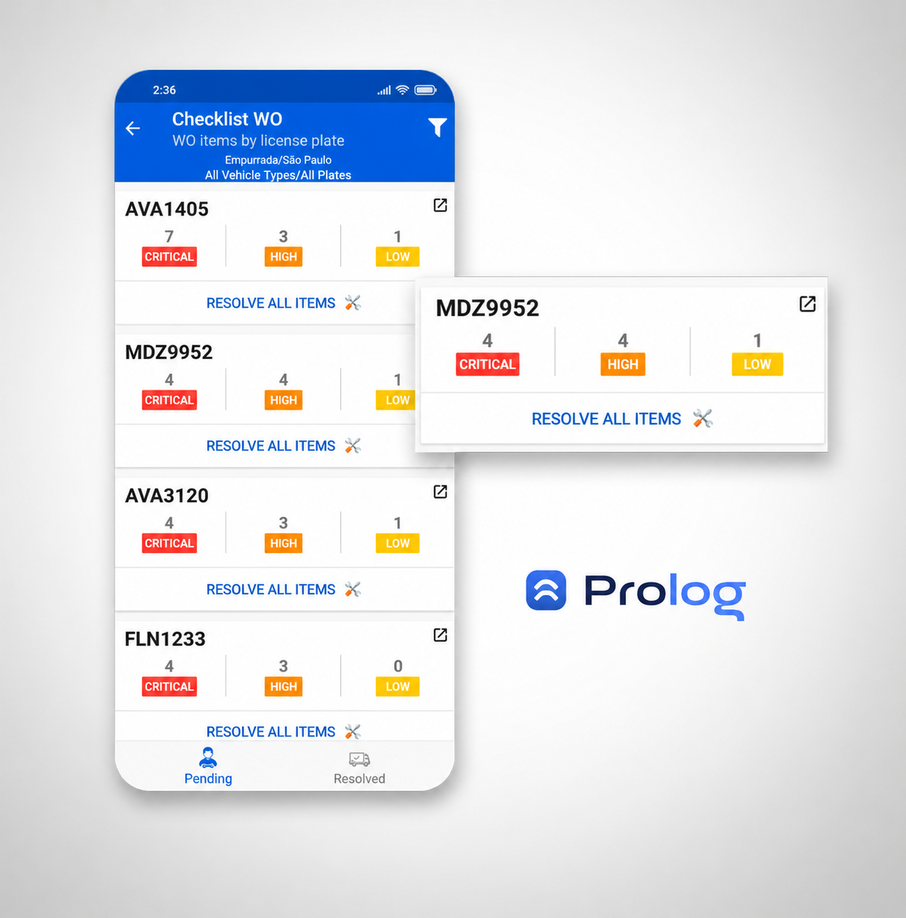
The electronic checklist is the best alternative, as it was introduced to reduce paper buildup in the fleet and bring greater speed and productivity to vehicle inspections.
It is an app that records all the data and organizes it automatically. Once a checklist is completed, if you want to find information, you simply select what you need and the desired date.
One additional advantage is automated report delivery, generating highly valuable insights to optimize fleet management.
The vehicle health feature is another distinguishing benefit. If a vehicle has an important work order open, the system identifies that license plate as unavailable for a route, preventing accidents and vehicle breakdowns along the way.
Want to discover a fully digital vehicle inspection checklist? Learn all about Prolog's electronic checklist solution in this free resource (in Portuguese).
Frequently asked questions
What needs to be included in a vehicle inspection checklist?
How long do I need to keep the fleet's paper checklists?
I am overwhelmed by paper checklists. When can I discard them?
What is the difference between the paper list and the electronic checklist?
How can you stop a vehicle with an unresolved issue from going out on a route?
Where should you store the list for a vehicle inspected at another branch office?
// newsletter
Fleet management content, straight to your inbox
Articles on tires, maintenance and fleet operations. No spam.


