Tire glossary: 22 everyday terms in fleet operations
 Luiz Felipe 12 min read
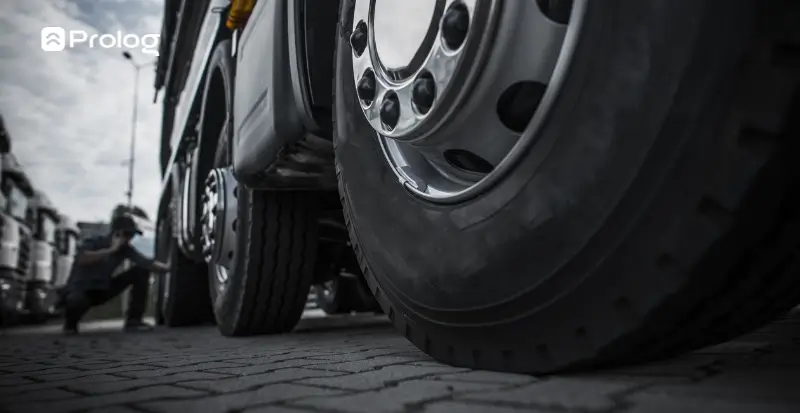
Tire management is a fundamental part of the routine of transport operations, and understanding everything about this asset is a duty of the tire manager and, of course, of the fleet manager.
Those who already work in the field may sometimes end up forgetting what a term means. Now imagine those who are just starting out: there is a lot to memorize, don't you agree?
Something that can make day-to-day work easier is having a glossary of the most used terms when the subject is tires. This content can become a reference tool for everyone in the operation. Take a look:
Tire grip
In general, tire grip is related to the maximum traction that tires generate and withstand on the road, during acceleration, braking or cornering.
In other words, it is the friction generated when they are in motion.
Each tire make and model has different characteristics in its structure and composition, including the quality of the materials used in manufacturing. These are all factors that influence the grip of these assets.
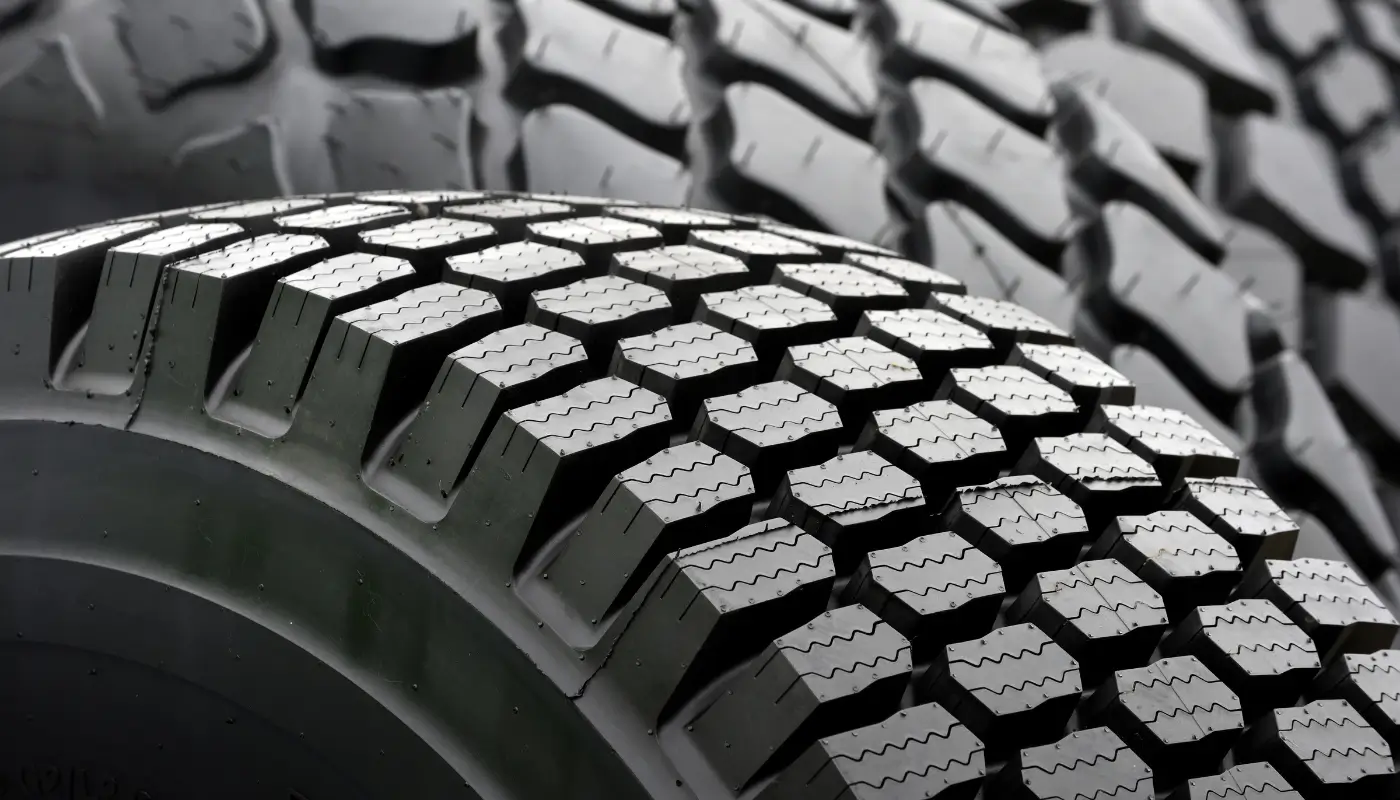
In addition to these, tread depth and groove design play an important role in determining it. The tread is the area that helps the tire maintain contact and grip with the road, especially in poor conditions, and that is why groove wear reduces the safety margin.
As for the designs, when they are “V”-shaped, for example, they are patterns better suited to rainy days and flooded roads, doing a better job of draining the water without the risk of skidding.
Tire structure
The structure of a tire, unlike a characteristic such as grip, does not change from one model to another. A tire always has:
- Tread – the part of the tire that touches the surface and where the tire's grooves and channels are;
- Shoulder – where the tread and the sidewall meet;
- Sidewall – the side of the tire, where you find information about each model, such as its size, manufacturing date, etc.;
- Stabilizer belts – the belts work as stabilizers for the tire, helping it run with greater safety and balance, and also protecting the casing from impacts and punctures;
- Casing – this is the inner part that supports the tire.
Treadwear rating
The treadwear rating is found on the side of the tire and serves to indicate an average of how fast it wears.
In short, the numbers range from 60 to 620, with 100 as the reference value. And the lower the number, the faster the tire is compromised.
To explain further, if a tire has a treadwear rating (TWI) of 80, it is expected to last longer than one rated 60, but both wear at an accelerated rate when compared with the reference value.
Tires rated above 100, on the other hand, are likely to last longer. That is, one rated 200 could last up to 2 times longer than the reference value.
However, do not take this as true in every case. A tire may have a lower treadwear rating and last longer, or a tire with a high rating may last only a very short time.
After all, tire durability also depends on how the tire was manufactured and its overall quality.
Tire grooves
Tire grooves are the standardized “holes” in the tread. They can have various shapes and arrangements along the tire tread, but they always serve the same function:
Helping both with the passage of air, promoting grip on the ground, and with the passage of water, preventing skidding and hydroplaning.
Tread depth also influences tire performance. The more the tread wears, the lower the ability to keep grip on the road tends to be; when the indicator bars become level with the tread, the tire needs to be replaced.
Tire severity
There are three tire severity classifications, namely:
High:
High severity means the grooves are deeper. This is the best type of tire for urban trips, as it is the most resistant to the constant acceleration and braking that raise tire temperature.
Medium
Medium severity balances the characteristics of the other two types of tires, offering both good resistance and good performance at high speed.
It is usually the type of tire most used in road transport, which requires trucks to run routes that alternate between highways and urban areas, sometimes even including dirt roads.
Low:
The low-severity tire is the one with the lowest resistance and the best performance at high speed, which makes it ideal for long-distance trips on state or interstate highways.
It is also light and contributes to savings in the fleet's fuel consumption.
Tire pressure
Tire pressure is controlled during calibration. For every vehicle model, there are values set by the manufacturers that recommend an ideal pressure for vehicle performance and better tire performance.
However, different tire models on the same vehicle perform differently, and road conditions also influence this. Among other factors, the best you can do is keep track of tire pressure and wear level.
That way, you gather enough information to carry out a tire performance analysis, identifying whether pressure may be the cause of negative results and adjusting the calibration until you reach the ideal pressure for each make and model, as well as for each route run in the carrier's operations.
Tire calibration
Tire calibration gives the truck better stability and reduces tire wear. In addition, it has an excellent consequence:
Savings in fuel consumption.
Inflating tires should be a routine task in fleets. Some specialists advocate the need to inflate tires every day. However, depending on the number of vehicles in the operation, this becomes unfeasible.
That is why the most recommended practice is to carry out calibration once a week. At the same pace, once a week, a pressure inspection should be done so that the data is recorded for later analysis.
Tread
The tread is, simply put, the part of the tire that is in direct contact with the ground, ensuring grip and firmness for the vehicle. Its types vary according to the condition of the surface the truck will run on. They are:
- Directional: provides stability to the vehicle, especially in curves, and performs better at high speed;
- Bidirectional: generates more traction with the ground;
- Symmetric: a type of tread aimed at giving the vehicle more balance;
- Asymmetric: performs better on wet roads and routes with many curves;
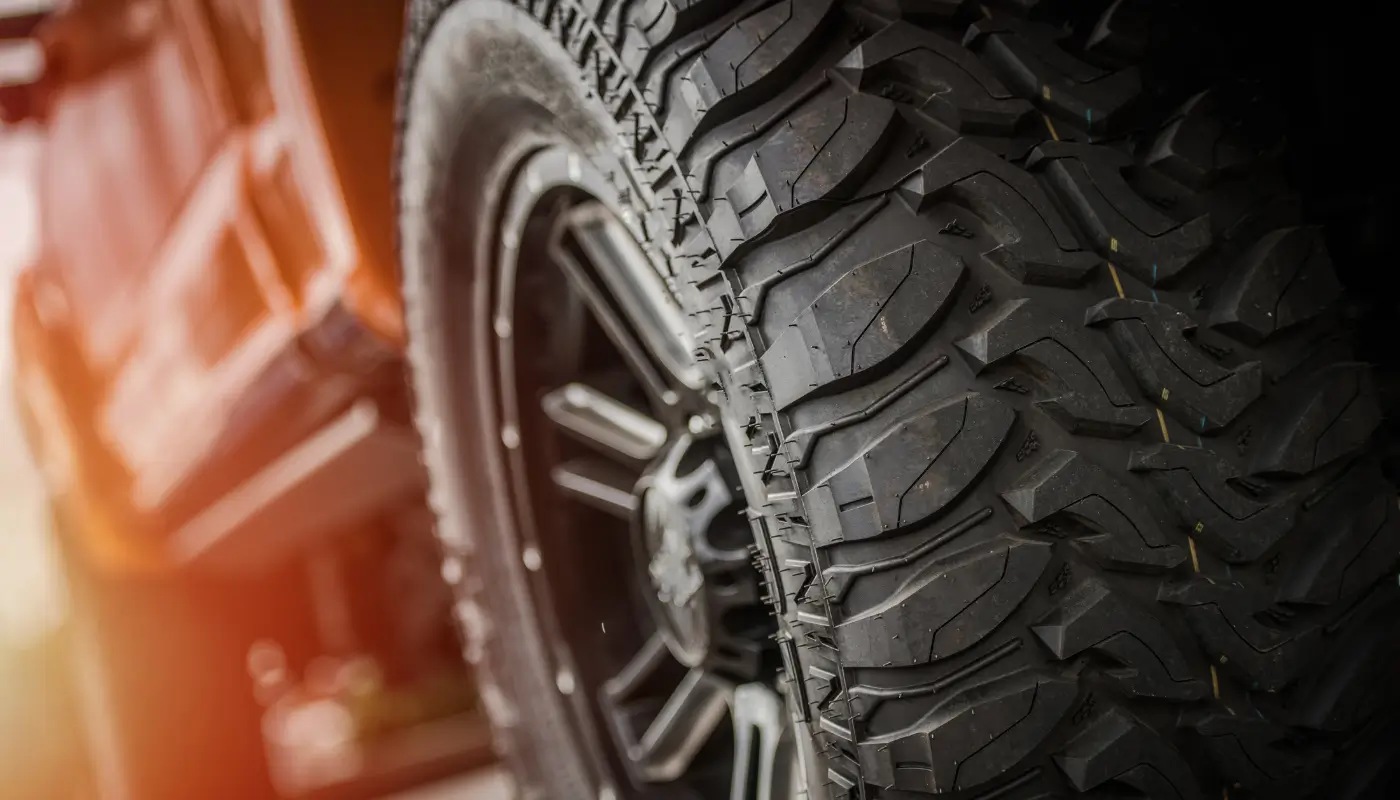
- Off-road: tread exclusively for travel on dirt roads, granite, rough terrain, etc.
Tire sidewall
The side of the tire, also called the sidewall, is responsible for absorbing irregularities in the ground. That is why it is made of a more resistant and flexible rubber, in addition to containing important information about the tire.
This information includes, respectively: the tire's manufacturing date; its width and height; the identification as a radial or bias-ply tire; its diameter; and the load and maximum speed indexes.
At the end of this, there is an empty space so that tire identification can be carried out, whether by hot branding or another type used in your fleet.
In fact, creating this mark for the tires is essential so that you can identify the individual performance of each asset and avoid losing your tires prematurely.
This loss also happens for other reasons, such as neglecting to carry out tire inspections and to keep track of their wear over time.
Tubeless tire
A tubeless tire is a type of tire that has, on its inside, a rubber layer that ensures air retention, especially in the event of punctures in the tread. Its greatest advantage is slow pressure loss, which means it needs to be inflated less often than other models.
Despite this, it only works with specific rims and suitable valves. That is why its use should follow the vehicle's specification and be assessed at a tire shop or workshop, instead of being treated as a choice limited only to light vehicles.
Rolling resistance
Simply put, rolling resistance is the force the tire receives when running on some type of ground.
It is an important characteristic to look at before buying a tire, because the greater its resistance, the greater the fuel consumption on a route run with this model.
And how is this resistance defined? Factors such as the diameter of the part, the surface it runs on and the pressure used can have an impact on it.
However, it is already an item shown on the INMETRO label (INMETRO is Brazil's National Institute of Metrology) at the time of purchase.
Wear indicator
The tire wear indicator serves to show when the tread depth reaches a minimum limit. It is a raised section on the tire located inside and at the bottom of the grooves.
When this raised section becomes level with the tread, it means the tire has reached its limit and must be replaced.
Valve
The valve is a cylinder-shaped device responsible for letting air into and out of the tire.
When used for inflation, the internal spring blocks the outlet and prevents the airflow from passing through the system.
On the other hand, when the tire needs to be deflated, the hose, set to the desired pressure, must be fitted onto the valve, and you must wait for it to allow the air to be released.
Hydroplaning
Hydroplaning happens when the vehicle loses contact with the ground because of a wet surface. This occurs mainly because of excessive tire wear and can cause serious accidents.
However, it can happen even with tires in good condition, when they are not fit to face a waterlogged road. After all, only some types of tires have a level of grip sufficient for this purpose.
Like rolling resistance, this information appears on the INMETRO label and is described as “wet grip” — with the tire rated “A” being the one with the best performance in this characteristic.
Run-flat tire
This tire model has reinforced structures to keep running even in the event of punctures or cuts. Depending on the model, it can run for up to 80 km, as long as the maximum limit of 80 km/h is respected.
Its main function is to preserve drivability as much as possible, preventing accidents on the road.
Not all vehicles can use this type of tire, so you should always assess the purchase and fitting of this asset at a tire shop or workshop before you start using it.
Braking distance
This is the distance traveled from the moment the brake pedal is pressed until the vehicle comes to a complete stop.
Understanding braking distance is important to identify when the tire has excessive or irregular wear, because the condition of the tires and the grip of the road surface influence the distance the vehicle needs to come to a stop.
This is because, when the vehicle takes longer to respond to the brake command, there may be a loss of the grip needed to bring the vehicle to a safe stop. In that case, it is necessary to assess the replacement and retreading, or the disposal, of this tire.
Mileage
As you can imagine, this is the number of kilometers a vehicle has traveled during its useful life. The number is measured by an instrument called the odometer, located on the dashboard, near the steering wheel.
It generally serves to indicate the vehicle's state of upkeep, and it is also an identifying factor for some types of preventive maintenance services — which also affect the tires.
Truck wheel balancing, for example, should take place every 10,000 km driven. Otherwise, it can cause unstable steering and generate irregular tire wear.
Therefore, carrying out mileage control and knowing when this mark has been reached is an important step in improving the durability and performance of vehicles and their assets.
Tire CPK
CPK is the acronym for “Cost per Kilometer” and, in this case, it refers to the tires' cost per km traveled.
The calculation considers the costs involved in travel and the total mileage run. After maintenance services, such as retreading, this amount is also included in the calculation.
Although it is a calculation that many fleets fail to carry out, it is essential to find the most cost-effective tires in a transport operation. This leads to smarter purchases and savings in both the short and the long term.
Retreading
Retreading works in a fairly simple way: a new tread is applied to the used tire, covering its entire casing. For this to happen, the old tread is buffed off and then replaced with the new one.
In addition, the retreading process is only possible when the tire casing is still in good condition and has not suffered fatigue.
Top-and-shoulder retreading
Top-and-shoulder retreading is a tire refurbishment procedure that reuses the casing of a damaged tire. Usually, when the tire suffers excessive damage and is rejected for retreading, top-and-shoulder retreading is then adopted as the solution.
The process is practically a reconstruction of the tire, consisting of applying unvulcanized rubber along the entire tread and also on the shoulders of the asset.
Tire management system
Tire management covers the various precautions taken to extend the useful life of the tire. A tire management system therefore aims to make the fleet's operation easier and more efficient, to achieve greater productivity and quality in the routine.
In addition to promoting savings and safety on daily routes, with tires running in the best possible conditions.
Within a system like this, you find the following features:
- Tire relocation;
- Inventory control;
- Automated reports;
- Analysis of the assets' wear level;
- Probable causes and solutions for worn tires;
- Automated tire CPK calculation;
- Registration of all license plates and assets.
In some cases, such as when you adopt the Prolog solution, you also receive the electronic tread probe, a tool that speeds up tire inspection and digitally records, during an inspection carried out by a person, the pressure and tread depth data.
Tire measuring device
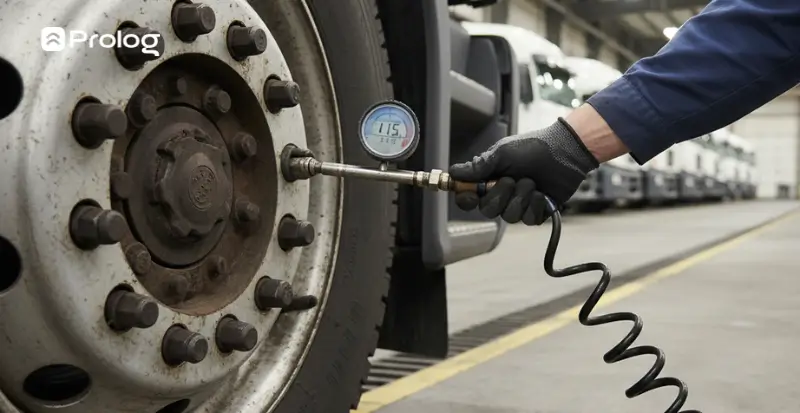
A tire measuring device is an instrument that measures tire calibration in order to keep track of the pressure. In other words, with it the driver can check whether the pressure is low or high and then take the appropriate action.
It also serves to keep track of the tread depth of each of the vehicle's tires, by measuring it.
The device can be either manual or digital. With the first type, the reading is taken by the inspector, whether the driver or the tire manager, after inserting the tool into the tire grooves. To measure pressure, a manual pressure gauge is also needed.
With the digital option, on the other hand, the same device can be fitted with the hose for measuring pressure. And, in this case, the data reading is recorded on the equipment used by the inspector and can feed a tire management system.
To understand how to extend the useful life of these assets, watch now:
(video in Portuguese)
Frequently asked questions
What is the tire treadwear rating?
How often should fleet tires be inflated?
What does tire severity mean?
What information is molded on the tire sidewall?
What is the difference between the types of tread?
// newsletter
Fleet management content, straight to your inbox
Articles on tires, maintenance and fleet operations. No spam.