Tire management app: how to choose one for your fleet
 Jean Zart 7 min read
Tire management apps are more than an upgrade: they are a necessity for anyone who wants to reduce costs and keep operations under control. After all, tires are among the fleet's most expensive assets and also among the hardest to keep track of.
You invest expecting durability, performance and safety, but without precise oversight, the result can be the opposite: premature wear, early disposal, lost retreading opportunities and a cost per kilometer that keeps rising.
According to Setcesp (the freight transport companies' union for São Paulo and the surrounding region in Brazil), tires represent around 8% of the fleet’s total costs, behind only fuel and maintenance. In operations with control failures, this figure can reach 20%.
How can you control your fleet's tires?
If you want to reduce tire costs, the first step is to establish a clear, standardized control process suited to your fleet's reality. Relying only on the team's memory or scattered notes is not enough: you need to turn tire control into a practical routine that generates reliable data and makes daily decisions easier.
Here is how to do it:
1. Ensure full traceability with hot branding
Each tire needs a unique code, and a hot brand is the most reliable way to ensure this. With this identifier, you can trace the tire's useful life from inventory through installation, rotations and retreading to disposal. This history is the basis for any more technical or financial decision.
2. Keep track of CPK (Cost per Kilometer)
Tire CPK is this asset's main performance indicator. It shows how much your operation is spending, in reais, per kilometer traveled.
If this number starts rising, it signals a problem: incorrect calibration, lack of rotation, wear or even aggressive driving. Keeping track of CPK by vehicle, tire type and supplier is the best way to cut waste.
3. Carry out preventive inspections frequently
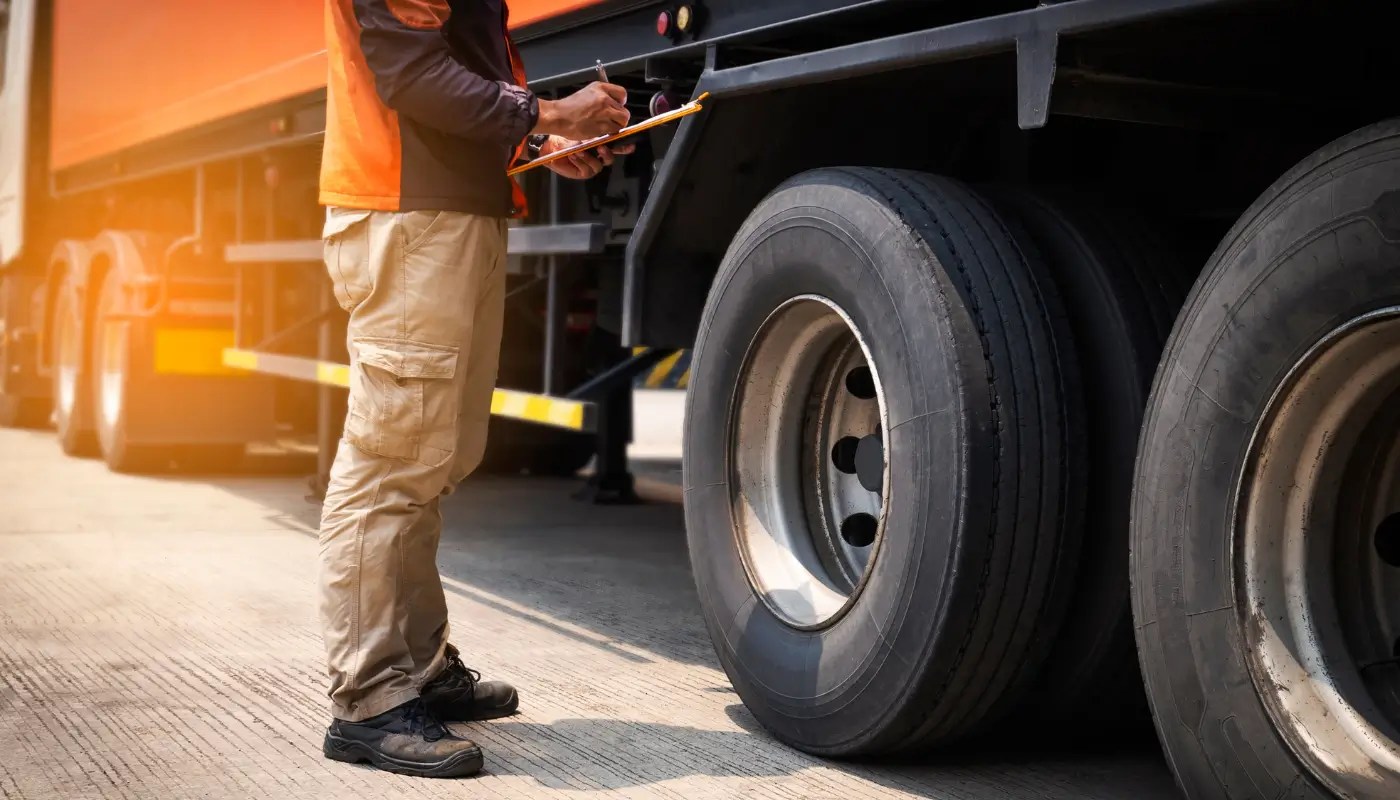
Do not wait for a tire to burst before acting. Inspections every week or every two weeks help identify wear, cuts, bulges, low pressure and other problems before they cause accidents or higher costs. Ideally, use an electronic tread probe to measure tread depth and maintain a reliable checking standard.
4. Set performance goals by tire type
After keeping track of the history, you can define how much each tire needs to deliver to be worthwhile. This could be 80 thousand km traveled, two retreads or a maximum CPK. These goals serve as criteria for purchasing, supplier negotiations and fleet financial planning.
5. Understand tires' financial impact on the operation
Tire control is also about understanding the financial impact. What is each tire's average cost per km? How many reais were lost through premature disposal? How much did you save with retreading? This information only becomes available when you have proper control and a tool that turns data into decisions.
6. Put technology to work with a tire management app
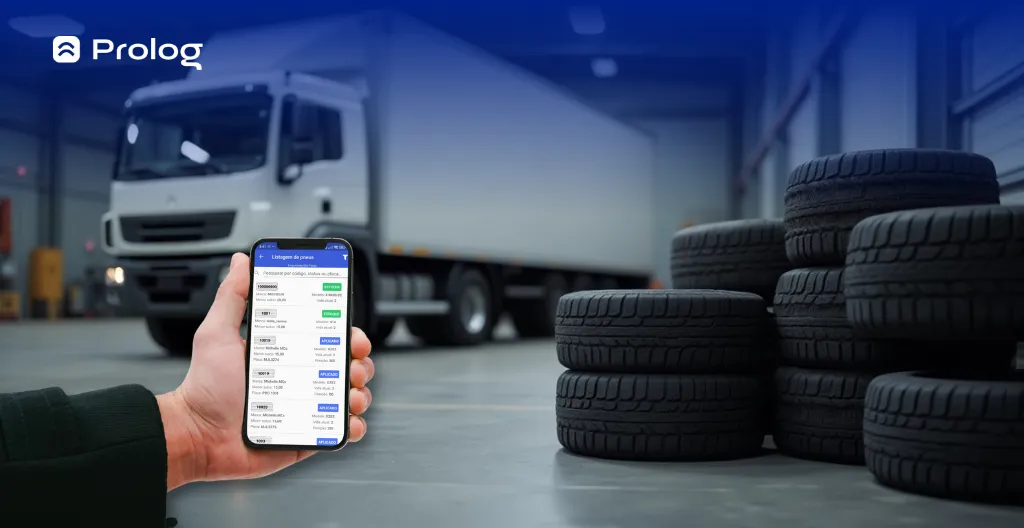
An app or tire control system reduces the risk of manual errors, centralizes operational data and makes each tire's complete history easier to consult. This lets you keep precise track of CPK, retreading and mileage — directly on your phone, tablet or computer.
Why use a tire management app?
You can try to control your fleet's tires with paper, spreadsheets or even mechanics' memories. But this kind of manual control is limited and can be costly for the transport company. What seems like a time saving turns into losses from tires discarded too early, rejected retreading or damage not identified in time.
And the impact goes far beyond finances. In Brazil, more than 450 thousand tonnes of tires are discarded every year (equivalent to 90 million units). A good portion of this volume could be avoided with stricter, preventive control.
That is why a tire management app makes all the difference. Beyond convenience, it is a strategic solution for anyone who wants to reduce costs, extend tire useful life and operate much more safely.
With a good system, you can:
- Keep track of the full tire life cycle, from installation to disposal
- Reduce operational errors with standardized records and reliable histories
- Control CPK (cost per kilometer) precisely by vehicle, make or route
- Prevent losses and theft with hot-brand traceability
- Strengthen negotiations with suppliers and retreaders using real data
- Anticipate replacements, rotations and retreading with smart alerts
- Integrate tire control with maintenance, refueling and inventory.
The app replaces guesswork with reliable data, completely changing how you look after your fleet.
Which tire management app should you use in your operation?
With so many options on the market, choosing the best tire management app may seem difficult. But the decision becomes simpler when you understand what really needs to be addressed in your operation.
First, ask yourself: can you currently identify which tires are about to be discarded? Or which have already been retreaded and are nearing the end of their useful life? If not, visibility is lacking — and that is where a good app makes the difference.
When choosing the ideal tool, look for a solution that:
- Controls the full life cycle, from purchase to disposal
- Generates automatic alerts for rotations, retreading and replacements
- Allows tire control to integrate with maintenance and refueling
- Provides indicators such as CPK by license plate, make or tire type
- Is easy to use every day, including for yard teams
- And, of course, offers support, training and ongoing updates
If your operation demands precision, speed and savings, you cannot keep relying on spreadsheets. Ideally, choose a tool designed for the reality of heavy-duty operations that need results.
5 advantages of using Prolog's tire management app
The Prolog Tire Management system is a complete solution for anyone seeking control, savings and safety for fleet tires. Below are five of its many advantages that make a difference in transport companies' daily work throughout Brazil:
1. Eliminate premature tire disposal
Yes, it is possible! Conlog, for example, eliminated premature tire disposal across all its operations after implementing Prolog. With the data collection system, the company began taking 5x more measurements, which brought the rate of tires with anomalies down to 0.3%, providing more control over work orders.
2. Reduce retreading rejections
Cobeb managed to reduce retreading rejections by 50% and reduce fuel consumption by 2%. By analyzing fleet tire information, it was possible to identify which tire models performed poorly and which offered the best CPK — which also fell after Prolog was implemented.
3. Carry out faster, more reliable inspections
Prolog's Inspection Kit is 100% Brazilian and developed specifically for freight transport in Brazil. With it, you take measurements electronically and much more precisely, reducing human errors and speeding up the process.
Each inspection takes less than 1 minute to complete, and the data is sent automatically to the system.
(video in Portuguese)
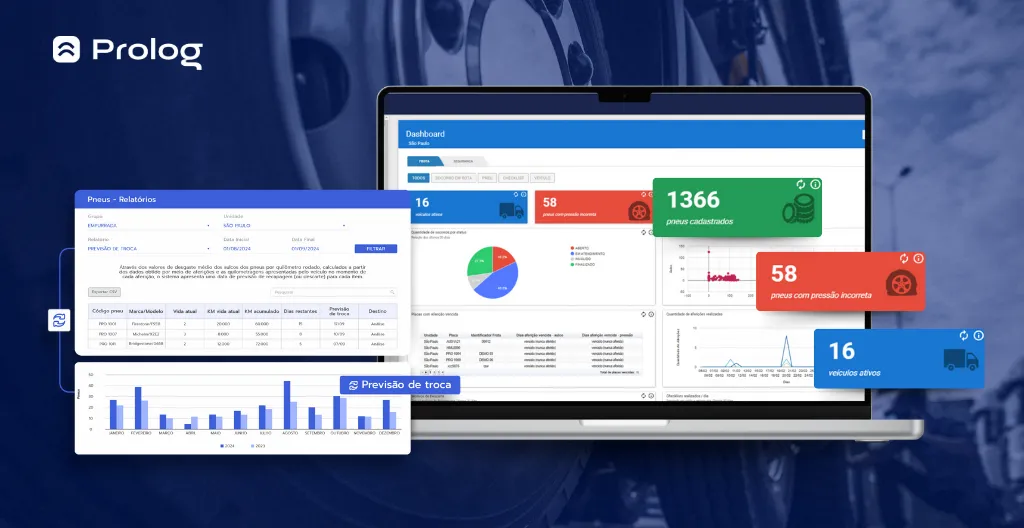
4. Access smart dashboards and reports
With Prolog, you turn information into strategic decisions. The system offers dashboards and reports showing indicators such as CPK (cost per kilometer), tire performance, completed retreading, disposal rate and much more.
With a clear view of fleet health, you can identify trends, quickly correct deviations and plan continuous improvement actions.
5. Integrate tire control with other operational areas
The Prolog Tire Management system integrates with ERPs, maintenance platforms and other software used in your fleet operation. This integration lets you cross-reference maintenance, refueling and tire performance data, making management much more precise and connected.
This reduces rework, speeds up communication between departments and supports better-informed decisions about the company's financial and operational health.
How can you implement Prolog in your operation?
Implementing Prolog's tire management app is simple, quick and designed to fit your operation's routine. From the first contact, specialists support you to make the process smooth, straightforward and free of interruptions to your fleet.
In a few steps, you establish digital tire control, reduce manual process errors and start seeing practical results in daily work. All with an easy-to-use system that integrates into the operation without obstacles or rigid processes.
Now that you have seen how a tire management app can transform your operation, how about taking the next step?
Request a free demonstration now and discover how Prolog can help your fleet eliminate waste, reduce costs and increase efficiency — with precise data in the palm of your hand.
Talk to our specialists and see how to achieve agile, straightforward and much safer tire management.
Frequently asked questions
How much do tires contribute to fleet costs?
Where does fleet tire control start?
What does CPK indicate, and what should you do when it rises?
How often should tires be inspected?
What criteria should you use to choose an app?
What results have fleets achieved with Prolog's system?
// newsletter
Fleet management content, straight to your inbox
Articles on tires, maintenance and fleet operations. No spam.