Data-age tire management: what to collect and how to use it
 Jean Zart 9 min read
Tire management in the data age represents a step forward for fleets, enabling detailed, accurate analysis that transforms tire maintenance and performance and, consequently, vehicle maintenance and performance.
By collecting, processing and interpreting data, it is possible to make more informed decisions, reduce costs and increase operational efficiency.
At Prolog, one of our goals is to make data collection and analysis more accessible for your fleet's tire management. That is some of what I will share with you below. Take a look:
- How data analysis works in tire management
- What data to collect
- How to collect this data
- How to process and use data efficiently
- What you gain from exploring data
- Common questions about tire management in the data age
How does data analysis work in tire management?
Data analysis is not exclusive to big tech companies. Companies such as Amazon, Google and Netflix constantly collect data to offer personalized services. In tire management, we can apply the same logic to improve efficiency and decision-making.
The data analysis process involves three fundamental steps in a continuous cycle:
Collection → Processing → Exploration
Learn about each one in more detail:
Collection: This is the first step, where we capture all relevant information about tires.
In our case, this includes make, model, size, tread depth, pressure, mileage and general condition. Digital devices and electronic tread probes help make pressure and depth measurements more accurate.
Processing: After collection, we organize and process this data to make it usable.
Tools such as spreadsheets, tire management software or more advanced solutions such as Power BI and Metabase are used to transform raw data into useful information.
Exploration: With the data processed, we analyze the information to identify patterns and trends.
For example, by keeping track of tire tread depth and pressure over time, we can determine the ideal pressure to maximize tire useful life and reduce fuel consumption.
In tire management, this analysis can answer questions such as: what is the best tire make to buy? What is the correct tire pressure? Which tire offers the best cost per kilometer in the operation?
These answers can vary from one company to another and, even within the same company, different vehicles may have specific needs.
What data should you collect?
Here are the main types of information you should gather:
Tire technical data:
- Make and model: identifying the tire's manufacturer and specific model is essential for comparing performance across different makes and types.
- Size: information on tire size, including width, height and diameter, helps ensure compatibility with fleet vehicles.
- Serial number: each tire has a unique serial number that makes it easier to keep track of the asset and its usage history.
In addition, you need to collect the following periodic information:
- Tread depth: regularly measuring tread depth helps monitor wear and determine when the tire needs to be replaced or sent for retreading. Record the measurement date, the name of the driver responsible for collection and the tread depth at the time of inspection.
- Tire pressure: checking and recording tire pressure regularly helps identify wear patterns and adjust pressure to ensure even wear and extend tire useful life.
- Mileage: keeping a record of the distance each tire travels makes it possible to calculate durability, keep track of cost per kilometer and plan replacements before excessive wear occurs.
Last but not least, you need to keep track of maintenance history, with information such as:
- Inspection and maintenance dates: record all inspections, rotations and repairs performed on each tire. This helps monitor the effectiveness of preventive maintenance and identify wear trends.
- Condition and retreading: note the number of retreads each tire has undergone and its general condition after each usage cycle.
The general idea behind this tire management process in the data age is to have enough information to carry out the processing stage and begin finding answers to the main questions about fleet tires.
You can then know how many kilometers and days a tire will last, the ideal pressure to minimize wear, which makes offer the best value for money and how much it costs to run each tire, among other indicators.
How do you collect tire data?
The more accurate the tool, the better the information obtained. Some tools that can be used include the caliper, a traditional tool for measuring tire tread depth.
However, although it can be effective, accuracy can vary in this case, especially when measurements are taken manually.
The situation improves significantly when you choose a digital caliper, since this tool offers more accurate and consistent measurements. Even so, manual work may still be needed to transfer this data into a spreadsheet or control system.
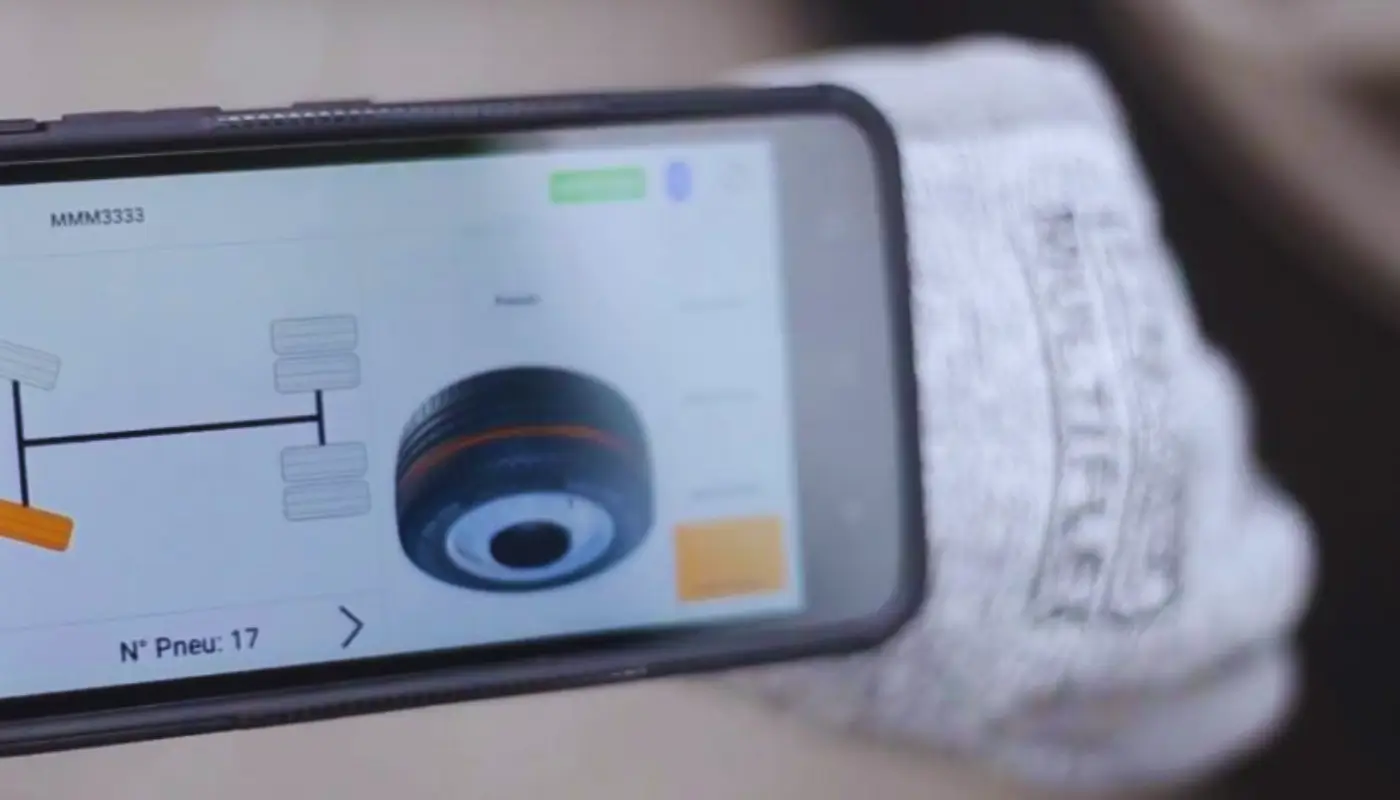
This is where the Prolog solution comes in. The electronic tread probe we developed has highly accurate technology for measuring tire tread depth and internal air pressure, and automatically sends the data via Bluetooth to the tire management system — also developed by us.
This eliminates the need for manual records, saving time and reducing the risk of errors.
How do you process and use data efficiently?
Several tools are available for this task today, such as Excel and Google spreadsheets, Power BI, Metabase and, of course, Prolog's tire management system, focused exclusively on tire data.
Each has advantages, and part of your work should be understanding your operation's needs so you can apply the best possible tool.
With spreadsheets, for example, you can organize your data to create customized tables, charts and reports. However, data entry and formula creation are manual, making them more prone to errors as well.
With tools such as Power BI, you can automate several activities, including creating reports and dashboards, but they are more general-purpose and usually need integration with different data sources to obtain more accurate and relevant results.
With the Prolog system, unlike the tools mentioned above, you centralize tire data and speed up processing. Inspection with the electronic tread probe makes collection more accurate, and records enter the system to support reports and analyses.
And implementing Prolog App in your operation is straightforward: you need to purchase the tread probe, register your tires and start collecting data. Processing will then be integrated, and you only need to access and analyze reports to use the data efficiently.
What do you gain from exploring tire data?
Tire management in the data age brings several benefits to your fleet. The highlights I can mention are:
Lower fuel consumption
Correctly inflated, well-maintained tires have lower rolling resistance, reducing engine effort and, consequently, fuel consumption.
That is why keeping track of tire wear levels and performing maintenance properly guarantees savings in your operation.
Lower overall tire costs
Monitoring and analyzing tire performance helps identify the makes and models offering the best value for money.
In addition, accurate data makes it possible to schedule preventive maintenance and avoid premature wear, extending tire useful life and reducing the need for frequent replacements.
Another way to assess this cost is to calculate a tire's CPK, adding purchase, repairs and retreading to understand how much it costs to run each asset in the operation.
Longer tire useful life
By understanding how and why tires wear, you can implement maintenance practices that extend their useful life. This includes regular rotations, alignment and balancing, and maintaining proper pressure, based on the data collected and analyzed.
Higher retreadability rate
Well-maintained tires are better suited to retreading, allowing the tire casing to be reused several times.
This not only reduces new tire purchasing costs, but is also a more sustainable practice. Keeping track of data ensures tires are removed from use at the right time for retreading, avoiding irreversible casing damage.
Less corrective maintenance
Corrective maintenance is always more expensive than preventive maintenance. Data analysis makes it possible to predict and prevent failures before they occur, reducing the need for emergency repairs that can cause unexpected downtime and high costs.
Confidence in decision-making
Access to accurate, well-organized data increases confidence in decisions. You can base your choices on concrete tire performance information rather than relying on assumptions or incomplete data.
Safety
Tires in good condition are fundamental to vehicle and driver safety. Constant monitoring ensures tires maintain good grip and stability, reducing the risk of accidents caused by tire failures.
Common questions about tire management in the data age
Here are some questions I have received that you may also have:
Does the company need a tire performance analysis laboratory?
No, it is not necessary. If the company has sufficient size and capacity, one could be set up, but the most important thing is for managers to get training and learn to collect and analyze data to achieve savings and greater asset durability.
Is there a tire control spreadsheet?
Yes! Although it is less efficient than a system and has capacity limits, if you are just starting out or have a small fleet, a tire control spreadsheet (in Portuguese) can indeed bring benefits.
Otherwise, if your tire management is already a little more advanced or you have a medium to large fleet, you may end up gathering too much information in your spreadsheet and lose the efficiency and ease of data analysis you expected.
Can you remove a tire from the operation at the right time for retreading?
Yes, by taking good care of the tire and maintaining a wear level across the entire tread, it is possible to put the tire through several retreads.
What we want to avoid at all costs is losing a tire prematurely because of casing fatigue. A tire must not be lost during its first life — it is one of the fleet's biggest economic wastes.
Instead of working with a fixed equivalence between a new tire and retreading, the ideal approach is to compare costs through CPK: add the tire's purchase price, repairs and retreading services, relate this total to the distance traveled and use the result to decide when to remove the tire, avoid retread rejection and preserve the casing.
Next steps (what to do with this information)
Now that you understand how tire management in the data age can transform your operation, I will share some practical tips you can apply immediately to your fleet:
- Organize your database: whether you use spreadsheets or a specialized management system, you need to keep your information well organized and accessible. This makes data processing and analysis easier.
- Identify your main pain points: assess your operation's critical issues, such as tire losses, excessive fuel consumption or frequent corrective maintenance. Knowing where the issues are makes it possible to direct efforts and resources to the areas most in need of improvement.
- Structure your data collection, processing and analysis cycle: create an efficient workflow to collect data accurately, process it properly and explore it for insights. This includes everything from choosing collection tools to analyzing the reports generated.
By taking these steps, you will be better prepared to implement efficient, data-driven tire management, reaping all the benefits I mentioned earlier.
Frequently asked questions
What data should you collect in tire management?
How do you measure tire tread depth?
What are the benefits of using data in tire management?
Does a tire control spreadsheet work?
How do you compare new tires and retreading in fleet costs?
Do you need a laboratory to analyze tire performance?
// newsletter
Fleet management content, straight to your inbox
Articles on tires, maintenance and fleet operations. No spam.