
Tire pressure control: when to inflate fleet tires
 Luiz Felipe 5 min read

Controlling tire pressure means reducing costs for fuel, maintenance, disposal and purchases of new tires.
But how does this happen? First, because low pressure increases the contact area with the ground, damages the rubber and makes the vehicle consume more fuel per kilometer traveled.
It also causes greater impacts on the vehicle in potholes and on rough roads, potentially breaking or wearing out parts before the end of their useful life and generating unplanned maintenance expenses.
High pressure likewise causes some damage — especially when we talk about vehicle safety. After all, when tires operate with too little or too much pressure, handling is affected, and stopping distance, braking grip and directional stability may worsen.
Have you understood some of the risks and consequences of failing to keep track? Then take a look:
What is tire pressure control and what is it for?
This type of control is carried out on fleet tires using manual or digital gauges and serves to identify when a tire is outside its ideal pressure.
This makes it possible to provide the solution when necessary: tire calibration.
It also aims to reduce premature tire losses, prevent uneven and/or accelerated tire wear, and prevent casing fatigue.
Why is tire pressure control important in fleets?
You can reduce costs in various areas of the fleet, from tires to maintenance costs. This is because tires affect other parts of the vehicle, such as the braking system.
In this case, excessive asset wear can increase braking distance, making the driver press harder to stop the vehicle and also causing wear on the braking system.
Tire wear also affects a vehicle's fuel consumption.
When a tire starts to wear, it gradually loses grip on the ground. This makes the engine work harder to generate the traction needed to move the vehicle. In other words, it burns more fuel.
Besides wear, incorrect calibration adds to the bill: if tires have too little pressure, the vehicle will consume more fuel per kilometer traveled.
Besides all these advantages, the costs of implementing tire pressure control are still lower than the cost you would incur from early casing disposal and purchases of new tires.
Applying this control in the fleet is one of the guarantees you have to stop losing tires prematurely in your transport operation.
See in the video when to check tire pressure and tread depth (video in Portuguese):
What methods are there for tire pressure control?
Manually or “by eye”
Controlling pressure manually is the same as saying you have no reliable control method. Here, we are talking about tactics such as using a hammer to see whether the tire is firm.
Another method is waiting until the tire is visibly deflated to confirm low pressure. Both are inadequate measurement methods.
If you do not yet have a tire pressure gauge in your fleet, you should get one. Use a reliable pressure gauge, measure with cold tires whenever possible and compare the result with the recommended pressure for the vehicle, not the PSI marking on the tire sidewall.
- Check pressure regularly; even with TPMS, one technical reference is to check every two to four weeks;
- Consult the applicable vehicle manual or table to identify the recommended pressure for front and rear tires;
- When the temperature drops or rises drastically, check again and inflate if the reading is outside the recommendation.
TPMS
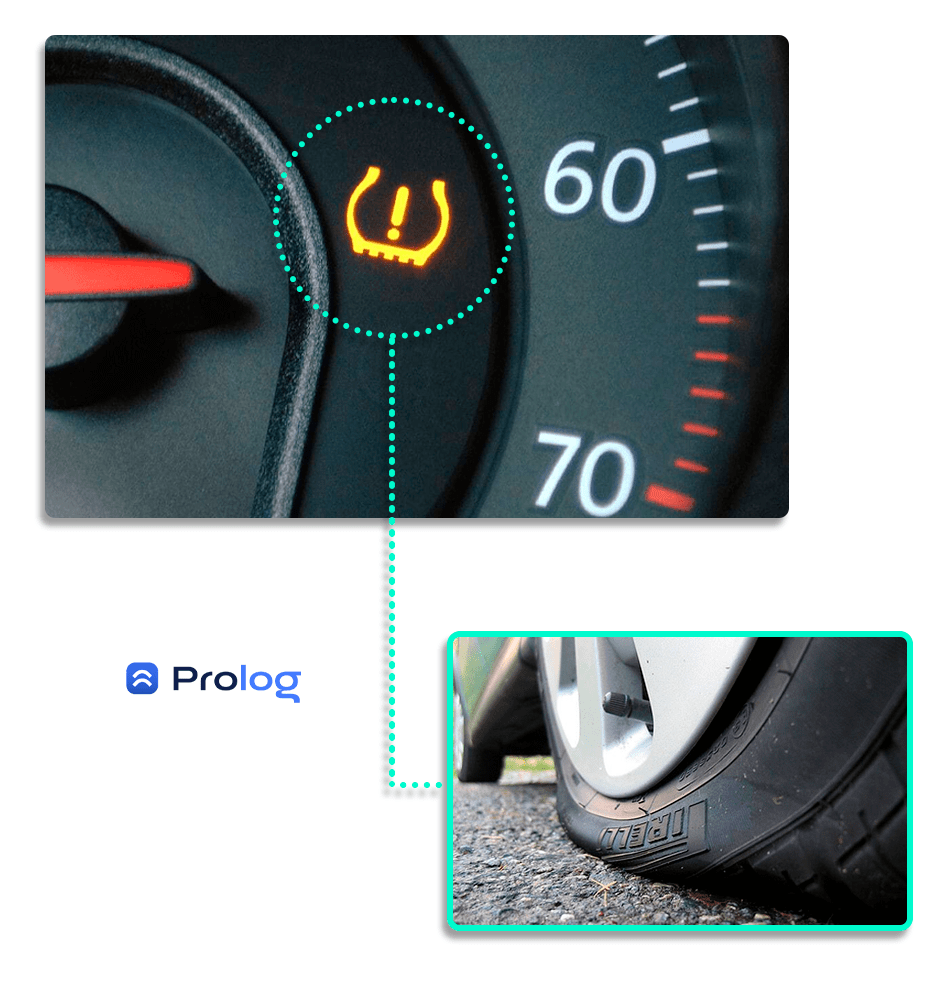
This is an English acronym for “tire pressure monitoring system.” There are some variations of this system, so how it works may vary slightly from one to another.
However, the ultimate objective is always the same: tire pressure control!
What is the secret?
These are sensors installed in each tire's valve that send information via radio frequency to the cab. TPMS also analyzes each tire's pressure and temperature individually.
Ignoring the sensor when it warns of inadequate pressure causes losses:
It affects steering stability and increases tire wear and fuel consumption. Consequently, it also increases emissions of polluting gases (CO²) into the atmosphere.
Therefore, if you decide to adopt TPMS, pay attention to its warnings. You will be reducing fleet costs and increasing transport operation safety. Even so, with TPMS it is still worth maintaining a pressure-checking routine with a reliable instrument.
Prolog App
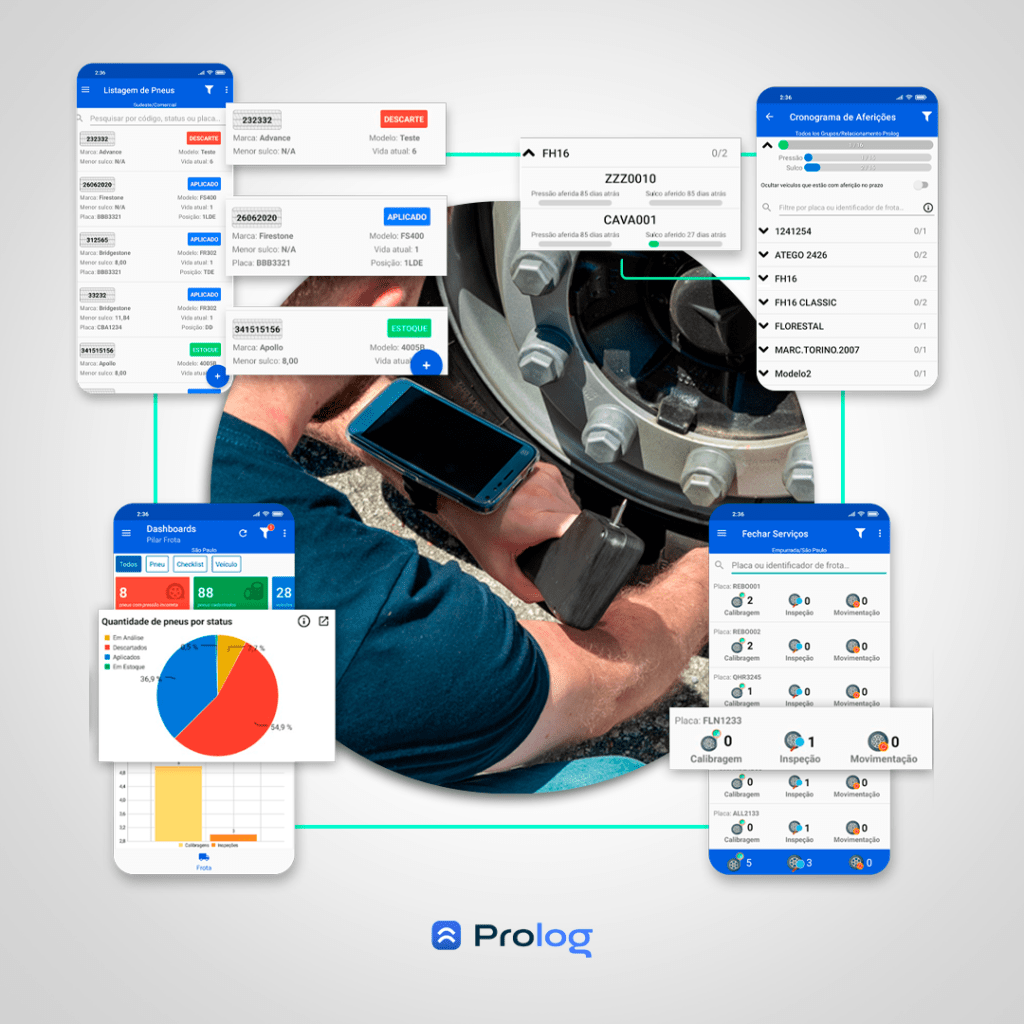
The Prolog solution does not capture temperature like TPMS, but it has another major advantage:
Besides tire pressure control, the tool collects tread depth.
Combining and keeping track of these two pieces of tire information provides clarifying conclusions about ideal pressure and the best models for each transport operation.
When using this alternative, you receive a digital tread probe and complete tire management software. During the inspection carried out by the team, the device records pressure and depth data and sends the information via bluetooth to the system.
In the system, this data is processed and organized into reports about fleet tires. Prolog also allows you to keep track of individual control of each tire, including wear, retreading, life cycle and cost per tire.
Want to know the replacement forecast for tire X? Which model offers the best value for money? How many purchases will be needed in the next 6 months? Prolog helps you turn tire inspections and records into a more organized management routine.
Is it possible to know the correct pressure for each tire?
Yes, provided you regularly control tire pressure and wear. The starting point should be the vehicle manufacturer's recommended pressure for the corresponding application.
Initially, the recommendation should be followed and respected. Consult the vehicle manual or applicable technical table and identify the recommended pressure for front and rear tires.
It is also important to measure under the right conditions: readings tend to be more accurate when tires are cold. If the reading is outside the recommendation, inflate or adjust pressure as needed, using a reliable pressure gauge.
If, even at the recommended pressure, the fleet continues to show uneven or excessive wear, investigate other operational factors before adopting any adjustment: load, axle, speed, route type, alignment, maintenance and usage conditions can affect the result.
All these conclusions are facilitated by choosing tire management software such as Prolog. Control tire pressure with our technology to make the most of the assets' useful life — explore the Prolog solution.
Frequently asked questions
How often should I inflate fleet tires?
How much does low pressure cost in fuel?
What is TPMS and how does it work?
Can you determine the ideal pressure for each tire?
Does checking a tire “by eye” work?
// newsletter
Fleet management content, straight to your inbox
Articles on tires, maintenance and fleet operations. No spam.


