Tire blowout: 8 causes and what to do immediately
 Diego Paludo 7 min read
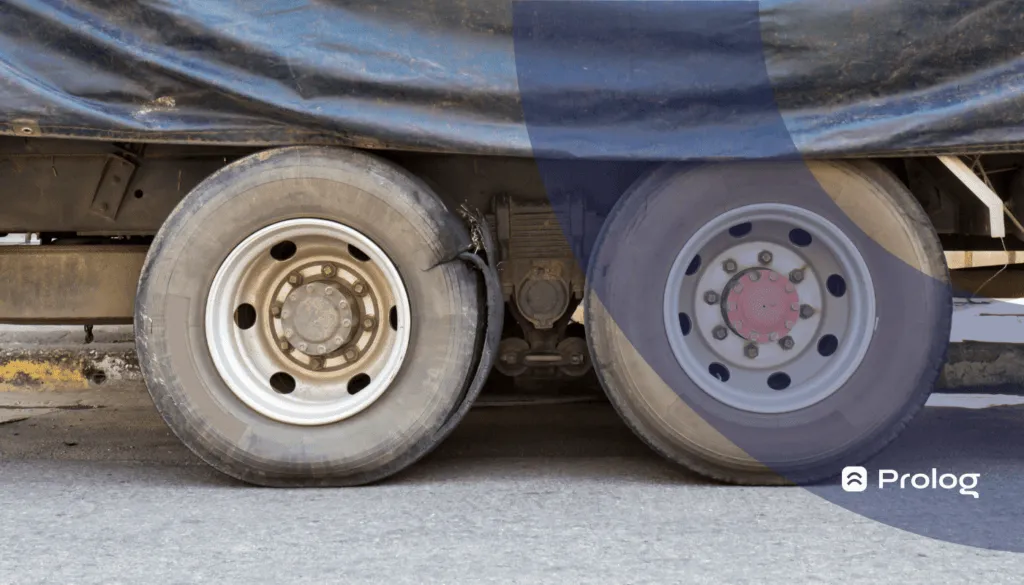
Tire blowouts are one of the most dangerous and costly incidents in road freight transport. Besides putting the driver's life at risk, they can compromise cargo, cause delays and generate major losses for the operation.
Most of the time, the issue is linked to simple faults — such as incorrect pressure, overloading or lack of maintenance — that go unnoticed in the fleet's daily routine. And when a blowout happens, there is not much to do beyond dealing with the damage.
Understanding the causes of blowouts and knowing how to respond is therefore essential to preventing emergencies and strengthening risk management in freight transport.
In this article, you will find:
- What are the 8 main causes of tire blowouts?
- What should you do when a tire blows out?
- How can you prevent tire blowouts?
- Tire care to increase useful life
Keep reading to discover how to prevent this type of failure before it causes accidents or irreversible losses for your operation.
What are the 8 main causes of tire blowouts?
A tire blowout may seem like a simple unexpected event, but it is almost always a reflection of a lack of daily care for the vehicle or how it is driven. The good news is that knowing the causes makes it possible to act preventively, manage fleet tires and avoid both financial losses and fleet safety risks.
Here are the main factors that contribute to a tire blowout — and what to do to prevent it.
1. Bulges
Tire bulges are easily visible and generally caused by hard impacts, such as potholes. If you find “swollen” areas in the rubber, it is important to replace the tire immediately with the spare — or, if the vehicle has not yet left the base, send it for a tire replacement service.
How to prevent it: avoid driving at high speed on roads with potholes or uneven surfaces, and maintain an inspection routine to detect deformation.
2. Driving on dirt roads
These roads have potholes, stones, branches, puddles and obstacles that demand much more from the tires and put pressure on the vehicle's shock absorbers.
How to prevent it: use tires suited to the road type (with a higher load index and greater resistance), maintain correct pressure and reinforce maintenance of suspension and shock absorption systems.
3. Excessive calibration
When a tire has more pressure than recommended, the rubber becomes stiffer and less able to absorb impacts.
Also, excess air causes internal pressure to build up and natural release to occur more slowly — straining the tire's internal structure. If this pressure does not find a controlled outlet, it ends up “looking” for a way to escape, leading to bulges and, of course, a blowout.
How to prevent it: always respect the manufacturer's recommended truck tire calibration and the maintenance plan. Consider load type, route and application.
4. Low calibration
When tire pressure is lower than recommended, the tire tends to become more deflated and deformed, compromising the casing structure and shock absorbers. In this condition, the tire absorbs more impacts and becomes vulnerable to potholes, stones and other road irregularities.
In more extreme cases, low calibration can cause bead unseating — when the tire comes off the wheel.
Both low and high pressure also increase fuel consumption and accelerate tire wear, generating unnecessary operating costs.
How to prevent it: establish an inspection routine at the ideal frequency, considering the application and load carried. Use equipment such as the electronic tread probe to ensure accuracy in pressure control.
5. Worn shock absorbers
Worn, unserviced shock absorbers cause a series of issues that negatively affect tires. They stop absorbing impacts correctly, causing irregular movements such as front-end dive, rear-end lowering during braking and instability in corners.
These effects overload both front and rear tires, causing uneven wear, overheating and, in more critical cases, blowouts.
How to prevent it: inspect shock absorbers periodically and replace components according to the maintenance plan. Watch for signs of wear and steering instability.
6. Faulty tire valves
Tire valves, commonly known as valve stems, are responsible for keeping tire pressure stable. Over time, they wear due to constant wheel movement and exposure to weather.
When damaged or faulty, valves can cause gradual or sudden tire pressure loss. This instability makes the tire more vulnerable to impacts and blowouts.
How to prevent it: replace valves at each new mounting or tire retreading. Visually inspect for dryness, cracks or looseness.
7. A stuck vehicle
When a vehicle gets stuck, continuing to accelerate can create excessive friction between the tire and the ground. This friction then heats the rubber intensely and uncontrollably, increasing the risk of a blowout.
How to prevent it: instruct drivers not to force the vehicle when stuck. Using suitable recovery tools is the ideal way to avoid tire damage.
8. Irresponsible driving
Driving at high speed is a rare cause of tire blowouts. However, when combined with a lack of maintenance, excess load, impacts or poor road quality, this scenario becomes quite possible.
Sudden maneuvers, aggressive braking and inattention also increase tire temperature and strain on the casing — factors that accelerate wear and open the way for structural failures.
How to prevent it: invest in driver training and reinforce the importance of good driving practices. Awareness helps preserve tires and, most importantly, the driver's life.
What should you do when a tire blows out?
If a tire blows out while moving, first of all, the most important thing is to stay calm and follow emergency steps to ensure the safety of the driver, cargo and other vehicles on the road.
Instruct your drivers to:
- Turn on hazard lights and reduce speed carefully, keeping the truck as straight as possible, without sudden maneuvers.
- Pull over in a safe place, such as the shoulder or an escape area, if available.
- Set up warning signals correctly, using the warning triangle at a suitable distance and, if possible, wearing a reflective vest.
- Assess whether it is possible to change to the spare tire, only if in a safe place and trained to do so.
- Contact the company's base immediately, especially if other vehicle damage is suspected.
- Send the vehicle to a trusted tire shop or workshop for a complete assessment and tire replacement.
- If the blowout happens in a hard-to-reach place or while stuck, call the transport company's tow truck or a specialized service, and do not try to resolve it alone.
Preparation makes all the difference in these moments. Drivers must therefore receive preventive training and know how to act safely when unexpected events occur on the road.
How can you prevent tire blowouts?
Preventing tire blowouts mainly involves a consistent preventive maintenance routine. Most cases result from faults that could have been identified in advance, such as excessive wear, bulges, cracks or incorrect pressure. The first recommendation is therefore to maintain frequent, thorough inspections, always focusing on safety.
Pressure inspection should be performed regularly using reliable equipment. Driving with pressure higher or lower than recommended compromises the tire's structure and drastically increases blowout risk. It is also essential to monitor tread depth, respecting the minimum limits required by law and good road safety practices.
Another important point is to respect the vehicle's load capacity. Excess weight puts pressure on tires beyond their design limit, accelerating wear and leaving the structure more vulnerable to failure. It is also worth emphasizing the importance of retreading through specialized companies that ensure the integrity and durability of the reused tire.
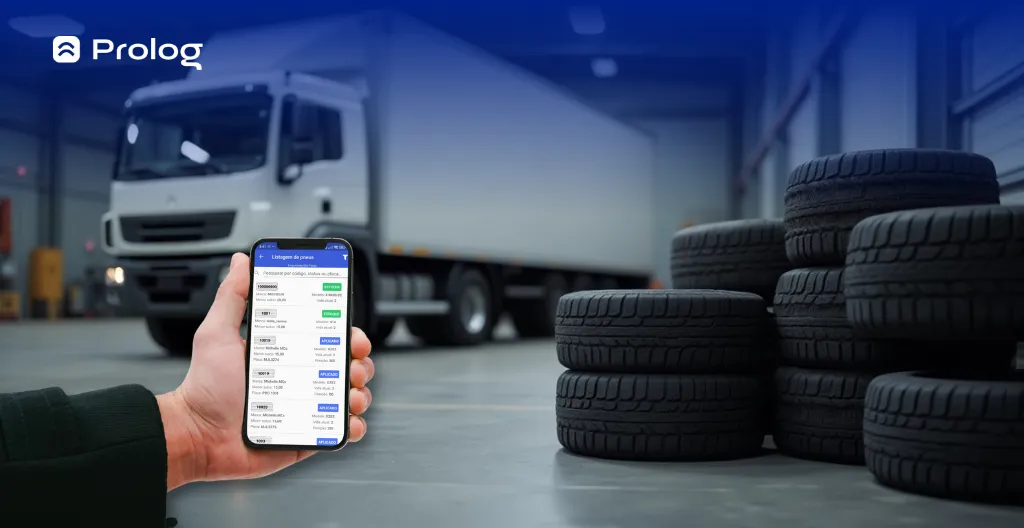
To ensure all these practices are followed in the fleet's routine, technology is a major ally, such as Prolog's Tire Management system. This way, you anticipate issues, avoid unexpected events on the road and reduce maintenance and replacement costs.
In short, preventive maintenance means safety — for both tires and the people behind the wheel.
Tire care to increase useful life
Keeping tires in good condition longer requires attention to details that make all the difference in fleet routines. Besides preventive maintenance and regular pressure inspections, it is important for drivers and the maintenance team to adopt good daily practices.
Some simple measures help prevent premature wear, increase tire efficiency and reduce replacement costs and unplanned downtime, such as:
- Performing tire rotation at the right interval
- Correcting alignment and balancing issues
- Avoiding overloading and excessive speed
- Performing frequent visual inspections for signs of wear, bulges and cuts
- Recording and keeping track of each tire's performance with support from a management system.
Want to learn more? Download the free guide to increasing tire useful life now and discover practical ways to avoid premature wear, reduce fuel consumption and ensure greater safety in your fleet.
Frequently asked questions
What are the main causes of a tire blowout?
What should you do when a tire blows out while moving?
Can a tire with low pressure blow out?
Can excessive calibration cause a tire to blow out?
Does high speed cause tire blowouts?
How can you prevent tire blowouts?
// newsletter
Fleet management content, straight to your inbox
Articles on tires, maintenance and fleet operations. No spam.