Low tire calibration: causes and 8 effects on the fleet
 Luiz Felipe 5 min read
Low tire calibration is an issue that often goes unidentified in the fleet, but it can have serious consequences, from early loss of the tire to increased fuel consumption.
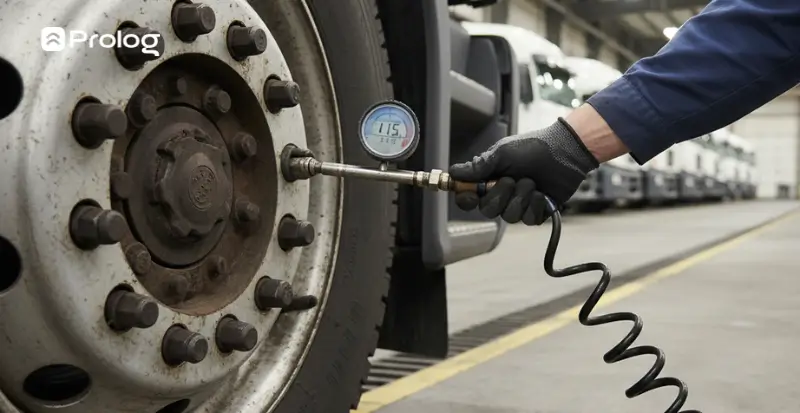
It is important for managers to take the necessary measures to keep track of the tires' internal pressure and identify how often calibration needs to be done.
These actions help avoid incorrect tire calibration and ensure that the negative results do not reach your operation. Learn more below:
- What is low tire calibration?
- What can cause poor tire calibration?
- Why is tire calibration important?
- When should you calibrate tires?
What is low tire calibration?
Low tire calibration is a condition of the tires in which their internal pressure is below ideal. In other words: they are underinflated.
What can cause poor tire calibration?
Poor tire calibration or constant, excessive pressure loss can happen for different reasons. Among them:
- Puncture or cut in the tire:
Even a small cut or puncture in the tire tread causes accelerated pressure loss. The issue becomes even worse when nails or screws pierce your asset.
- Valve issues:
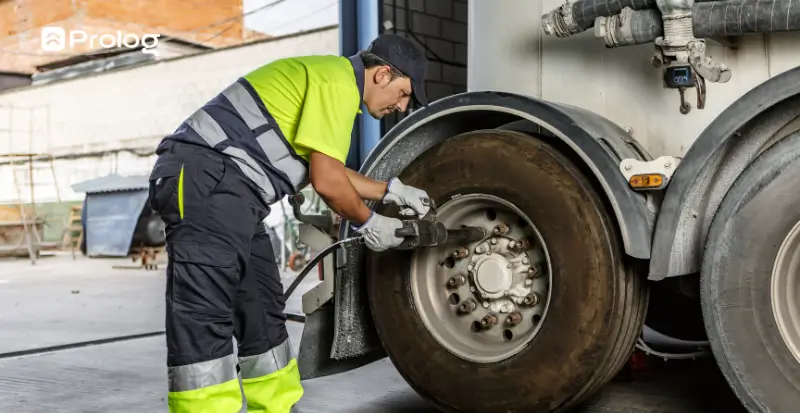
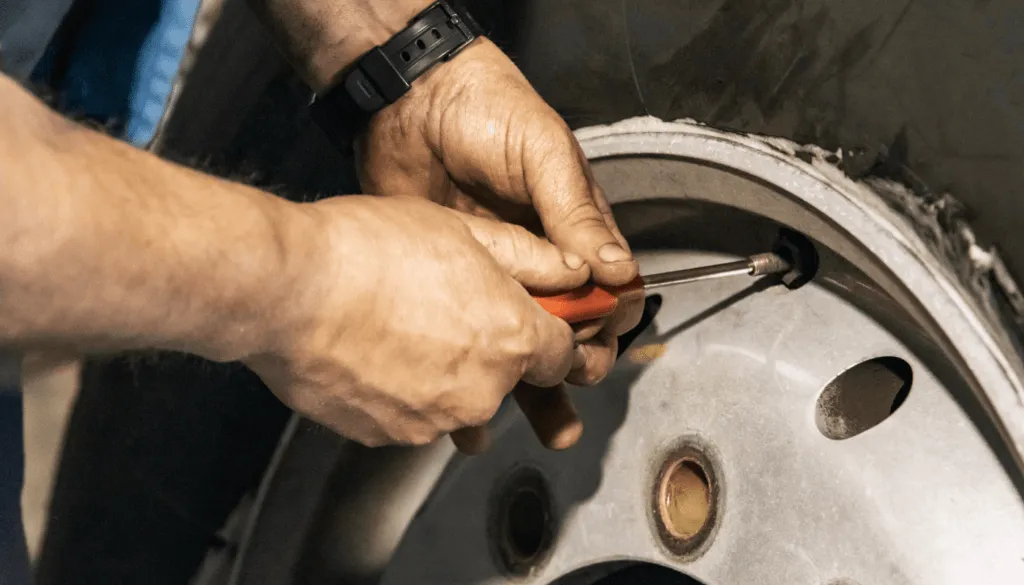
If the valve is worn or has other damage, it may be the reason for a rapid loss of pressure, which leads to low tire calibration. It is also important to check this item when carrying out the tire inspection.
In some cases, the valve cap may be missing.
- Driver error
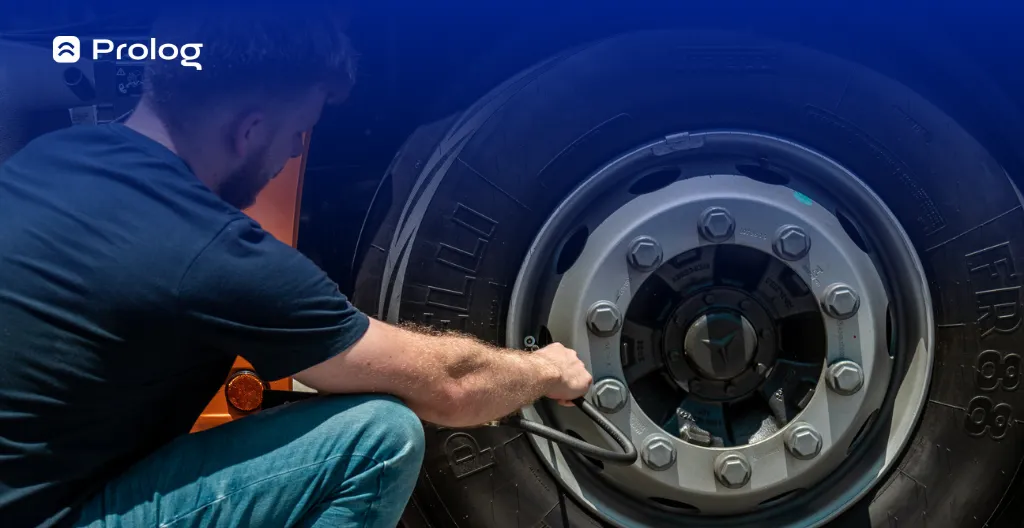
The driver is usually responsible for calibrating the tires and, through a lapse of attention during the task, ends up using the wrong pressure measurement for the vehicle's tires.
The error can be either a few pounds above or below.
- Manager error
If the manager makes an incorrect analysis or fills in information incorrectly in their fleet control tools, there is a possibility that they will pass the wrong tire calibration data on to their driver.
- Temperature changes
This is the reason we have the least control over, but temperature changes can indeed be a cause of tire pressure loss. The colder it gets, the lower the tire pressures become.
Likewise, when the temperature rises, the pressure will be higher.
Want to see this in your fleet? Talk to a Prolog specialist
Why is tire calibration important?
It is important to maintain the tires' ideal calibration so that the vehicle's weight is distributed correctly over all the tires, generating greater stability, balance and fuel economy in transport.
In addition, low tire calibration can cause…
Reduced tire useful life
This happens because running on an underinflated tire causes greater wear on the tread shoulders, since this part stays more in contact with the ground, absorbing the impacts of a route.
In addition, running without the correct tire pressure leads to overheating of the asset, causing both external and internal damage to its components and making the tires run less than they should.
In other words, these issues reduce the vehicles' expected mileage.
Longer braking time
Some may think that low tire calibration improves braking capacity, but that is not quite how it happens.
In practice, pressure outside the recommendation — including below ideal — reduces tire grip and can increase stopping distance. That is why running on an underinflated tire compromises the vehicle's response when braking is necessary.
Greater sensitivity to impacts
Low tire calibration ends up making the rubber a little “softer”. When it takes impacts, such as potholes or cracks in the road, the tire becomes more susceptible to greater damage — such as cuts, punctures and bulges.
In addition, there is also a greater chance of a tire blowout.
Reduced tire handling
Tire handling corresponds to the comfort the tire gives the driver when steering the vehicle. If the steering wheel starts to feel heavier, for example, it is a sign that handling is being reduced, and low tire calibration is one of the reasons for this.
Higher transport operation costs
Costs increase because tire purchases are needed more often, since tires are discarded too early.
In addition, there is also higher fuel consumption, due to the greater effort the engine makes to bring the vehicle up to speed.
Breakage or displacement of parts
Although the tire bears the main consequences, the vehicle is also affected and may show wear, displacement or damage to parts and components of its structure.
In addition to reducing the vehicle's useful life, this increases its maintenance costs.
Tire bead unseating
Bead unseating happens when the tire comes off the wheel. Although it is not a common or recurring situation, it can happen, even more so when the tire's pressure is below ideal.
Less stability in curves
Both low and high calibration cause a loss of stability in curves. In the case of pressure below ideal, it is because the tire becomes heavier and makes the vehicle's movement more difficult.
When should you calibrate tires?
As a general rule, tires should be calibrated weekly. In some cases, tires may even be calibrated daily — such as when they cover longer distances over a long period or during periods of very abrupt temperature changes.
To identify the ideal frequency, you should carry out tire pressure control and do the inspection every week.
By collecting and analyzing this data, understanding the variation that occurs between each period, you can identify when pressure loss is above average and what the reasons for it are.
How to keep track of low tire calibration
To keep track of this, you need tools that help and make measuring tires a faster and more practical task.
The caliper was widely used in the past, but it no longer meets the requirements of increasing the productivity of the fleet routine and also provides low-precision data, which can result in errors when recording the information in a checklist or control spreadsheet.
Currently, the electronic tread probe is the best solution. It has 99% precision and is easily connected to the tire management system via a bluetooth connection.
Learn even more about this tool in our free material: download it here (in Portuguese).
Frequently asked questions
What is low tire calibration?
What causes tires to lose pressure?
What issues does an underinflated tire cause in the fleet?
How often should fleet tires be calibrated?
How do you keep track of the fleet's tire pressure?
// newsletter
Fleet management content, straight to your inbox
Articles on tires, maintenance and fleet operations. No spam.