New truck tire mileage: 60 to 80 thousand km
 Luiz Felipe 5 min read

You may be tired of reading that tires are fundamental to every vehicle, but can you say how many kilometers a truck tire covers? After this post, there will be no more doubt.
Want to see this in your fleet? Talk to a Prolog specialist
Cold, heavy rain, scorching asphalt in poor condition, unpaved roads, sharp objects:
These are some of the main causes of tire damage during transport operations.
Knowing a truck tire's characteristics and mileage is essential to extend its useful life through regular maintenance and retreading when necessary.
This care helps generate more savings and road safety. Of course, a tire does not last forever. If only it did! But with the right information, you can extend its useful life and prevent an estimate from becoming a promise.
Now, to the point:
How many km can a truck tire cover?
A new truck tire can cover from 60 thousand to 80 thousand kilometers. However, this range is an estimate, not a fixed guarantee. Distance depends on many factors, such as:
Make and quality
Each make uses different raw material quality in its product, which is why some tires are more resistant and also more expensive.
The reasoning is logical: the higher the production quality, the higher the retail price.
Load weight
Tire durability is directly related to the load carried. Vehicles carrying heavy loads tend to wear tires faster, especially above the vehicle's load limit.
It is therefore essential to know the maximum weight a vehicle can carry. This is determined by chassis configuration and axle capacity, ensuring suitable weight distribution to avoid overloading.
You should also know the maximum load supported by the tires. The two limits do not always match, requiring a tire change or other action to prevent asset wear.
However, even if the tire supports more load than the vehicle, avoid overloading and losses from truck structural wear.
Want to see this in your fleet? Talk to a Prolog specialist
Temperature
Very worn tires or those lacking proper maintenance, including proper calibration, are susceptible to rising temperature while driving.
Excessive heat can impair tire structure, degrade casing materials and even cause damage such as layer separation, bulges and ruptures.
Intensive driving, such as long climbs or descents, further increases risk because traction and braking demand generates more heat. Low-pressure tires also tend to accumulate more heat, reinforcing the importance of routine fleet pressure checks.
Type of road the vehicle uses
Trucks using roads in poor condition, whether potholed or unpaved (dirt, stones, branches, etc.), consequently have reduced tire durability because of greater external structural damage.
They can also suffer punctures more easily for the same reasons.
Tire maintenance frequency
Checking tire wear is one of the best ways to extend useful life, since if a casing defect appears, there is time to restore it.
Preventive maintenance does not turn the 60 thousand to 80 thousand kilometer range into a minimum guarantee, but helps operations approach the best possible performance for that application. Proper tire care, including correct pressure, stabilizes structure and can extend average tire life.
Retreaded tires can provide additional tire lives. Rather than assuming every retreaded tire will match new tire mileage or last a fixed two to three years, treat retreading as an alternative dependent on technical assessment of the tire and operation.
How do you know how many km a truck tire has covered?
The usual way to know mileage is to check the truck dashboard odometer. At each tire replacement, note current vehicle mileage on a sticker placed somewhere visible or in a tire and trip control spreadsheet.
Remember to record mileage after each trip too, so you can approximately calculate how far each tire traveled before disposal.
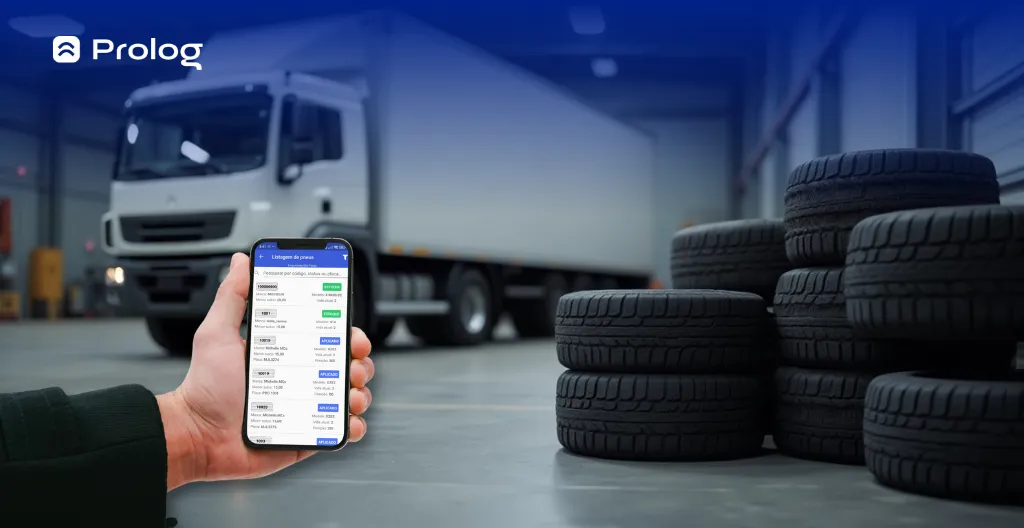
To make the process easier and faster, a tire management system is essential. The software automates both truck tire mileage calculations and tire CPK calculations.
How can you improve tire performance on truck trips?
Some fundamental precautions help you make full use of a tire and improve performance and safety on truck trips.
These include:
1. Check tread depth
Check tire tread depth weekly, remembering it cannot be below 1.6 mm. Below that, tires are considered bald and start posing risks to drivers, since the truck can easily slide and hydroplane.
2. Maintain recommended calibration
Tire calibration can — and should — be performed regularly, checking pressure every two to four weeks and always before longer trips or when carrying additional loads.
Pressure must exactly match the vehicle manufacturer's recommendation or the calibration determined after several months of analysis and adjustment with the tire management system. Pressure below or above specifications can affect handling and accelerate wear.
3. Perform alignment and balancing
Alignment is an adjustment that ensures vehicle stability on the road, without the vehicle pulling to either side. This procedure is essential to prevent uneven tire wear, extending useful life and improving fuel efficiency.
Alignment is recommended every 10 thousand km, but more frequent checks may be needed when the truck often uses poor roads or carries heavy loads.
Signs such as uneven tire wear, steering pulling to one side or difficulty returning the wheel to its central position after a turn may also indicate the need for alignment.
Balancing ensures tires rotate without vibration. When this adjustment is needed, the vehicle may have noticeable vibrations in the steering wheel and chassis, especially at high speeds.
Balancing should be done whenever a tire is mounted on a wheel or, like alignment, every 10 thousand km. In practice, also watch for vibrations, uneven wear and manufacturer or workshop guidance, because no single interval suits every vehicle and application equally.
4. Rotate tires
Rotation helps distribute tire wear evenly, giving the truck more stability and safer braking.
You can have this service done whenever you plan vehicle alignment and balancing.
5. Include regular maintenance in the fleet routine
An organized logistics company needs a regular fleet maintenance schedule. Alongside checking truck condition, the service inspection is when a large share of the recommendations above are also carried out.
We know trucks and their parts have a high cost, especially for logistics companies with several vehicles meeting customer demand. Care to keep them well maintained is therefore indispensable.
To record all important information and understand how many km a truck tire covers in your fleet, download our tire control spreadsheet.
It is free and helps keep all data updated and organized at your fingertips.
Want to see this in your fleet? Talk to a Prolog specialist
Frequently asked questions
How many km can a truck tire cover?
Does heat affect tire durability?
How many km can a retreaded tire cover?
How do you know how many km a truck tire has covered?
What is the minimum tire tread depth?
How often should alignment and balancing be done?
// newsletter
Fleet management content, straight to your inbox
Articles on tires, maintenance and fleet operations. No spam.